Choose liquid silicone rubber when the application genuinely needs silicone-specific temperature, weathering, electrical or long-term sealing behavior and dedicated LSR tooling is justified. Choose a thermoplastic elastomer when thermoplastic processing, broad hardness and overmolding options, recyclability of clean process scrap or simpler material handling better fit the product. The final grade must be selected from tested service conditions—not from the words ‘silicone’ or ‘rubber-like’ alone.
Key takeaways
LSR is a heat-cured thermoset silicone; TPE is a family of melt-processable thermoplastic elastomers, so their tooling and production routes are fundamentally different.
Temperature range, compression behavior, fluids, sterilization, bonding, feel and regulatory evidence must be checked on the exact commercial grade.
A quote-ready package includes the service environment, hardness target, substrate or insert, quantity forecast, color, critical dimensions and validation plan.
01
Quick answer: use performance needs to choose LSR or TPE
Liquid silicone rubber (LSR) is often selected for seals, valves and flexible parts that must retain function through temperature changes, outdoor exposure or repeated deformation. It is a two-part liquid silicone that is mixed and heat-cured in a mold; after cure, it cannot be remelted like a thermoplastic.
Thermoplastic elastomer (TPE) is a broad family that softens when heated and solidifies when cooled. TPE is widely used for grips, flexible covers, seals and overmolding. Some grades bond to specific rigid substrates; others need mechanical interlocks. Always specify the commercial grade.
| Decision factor | Liquid silicone rubber (LSR) | Thermoplastic elastomer (TPE) | Project question |
|---|---|---|---|
| Polymer behavior | Heat-cured thermoset silicone | Melt-processable thermoplastic elastomer family | Must the part retain silicone-specific behavior, or is thermoplastic flexibility sufficient? |
| Processing | Two-part metering, mixing and heated cure with LSR-specific tooling | Melt, inject and cool on suitable thermoplastic molding equipment | Which process and mold concept match the selected grade? |
| Temperature and weathering | Often selected for broad temperature and outdoor stability | Varies widely by TPE chemistry and grade | What are continuous, peak and low temperatures plus UV or ozone exposure? |
| Compression and sealing | Strong candidate for repeated sealing and elastic recovery | Can work well, but creep and compression set are grade- and condition-dependent | How long, how far and at what temperature is the part compressed? |
| Overmolding | Bonding can require a self-bonding grade, primer, compatible substrate or mechanical lock | Many grades are formulated to bond to specific thermoplastics | What is the exact substrate, surface condition and bond requirement? |
| Reprocessing | Cured LSR cannot be remelted | Clean process scrap may be reprocessable where the grade and quality plan allow | Are recycled content or process-scrap rules part of the program? |
| Cost structure | Dedicated metering, cold-runner strategy and cure control | Material drying, melt processing, cooling and overmold compatibility | Compare tooling, cycle, yield, validation and lifetime demand—not resin price alone. |
02
Start with the exact service environment
The most useful material brief describes what the part must survive. Record normal and peak temperatures, duration, fluids and cleaners, sunlight or ozone exposure, electrical requirements, expected service life, deformation and recovery, and whether the part contacts skin, food, drinking water or a regulated fluid path. A broad statement such as ‘medical grade,’ ‘food grade’ or ‘high temperature’ is not a complete material specification.
Supplier data is normally generated under stated laboratory conditions. Tensile strength, elongation, hardness, compression set and chemical resistance can change with temperature, test method, specimen thickness, post-cure and aging. Use data sheets to shortlist grades, then validate the molded part in the real assembly and use environment. For regulated products, confirm the evidence required for the exact grade, colorant and manufacturing route; do not transfer a compliance claim from a different formulation.
03
Performance tradeoffs that matter in the finished assembly
LSR is frequently considered when temperature stability, weather resistance, electrical insulation or long-term flexibility are central. TPE families offer broad choices in softness, abrasion, grip, color and adhesion to rigid plastics. Neither category wins every property; compare exact grades under the intended conditions.
Compression set and sealing
For gaskets, valves and diaphragms, evaluate compression set at the actual time and temperature. Seal geometry, squeeze, gland fill, surface finish and mating tolerance matter as much as the elastomer. Age the complete interface when leakage or recovery is critical.
Hardness and feel
State the Shore scale and test method. Equal nominal hardness does not guarantee equal feel because modulus, wall thickness, texture and support differ. Evaluate molded samples in the final geometry for tactile requirements.
Chemical and environmental exposure
Silicone is not universally chemical-proof, and TPE families vary widely. List fluids, cleaners, lubricants and sterilization with concentration, temperature and contact time. Obtain grade-specific evidence and test compatibility where failure matters.
04
Processing and tooling are fundamentally different
LSR is supplied as two liquid components that are metered and mixed before injection. The delivery system prevents premature cure while the heated mold cures the part. Low viscosity helps fill thin features but makes shutoffs, venting and flash control important.
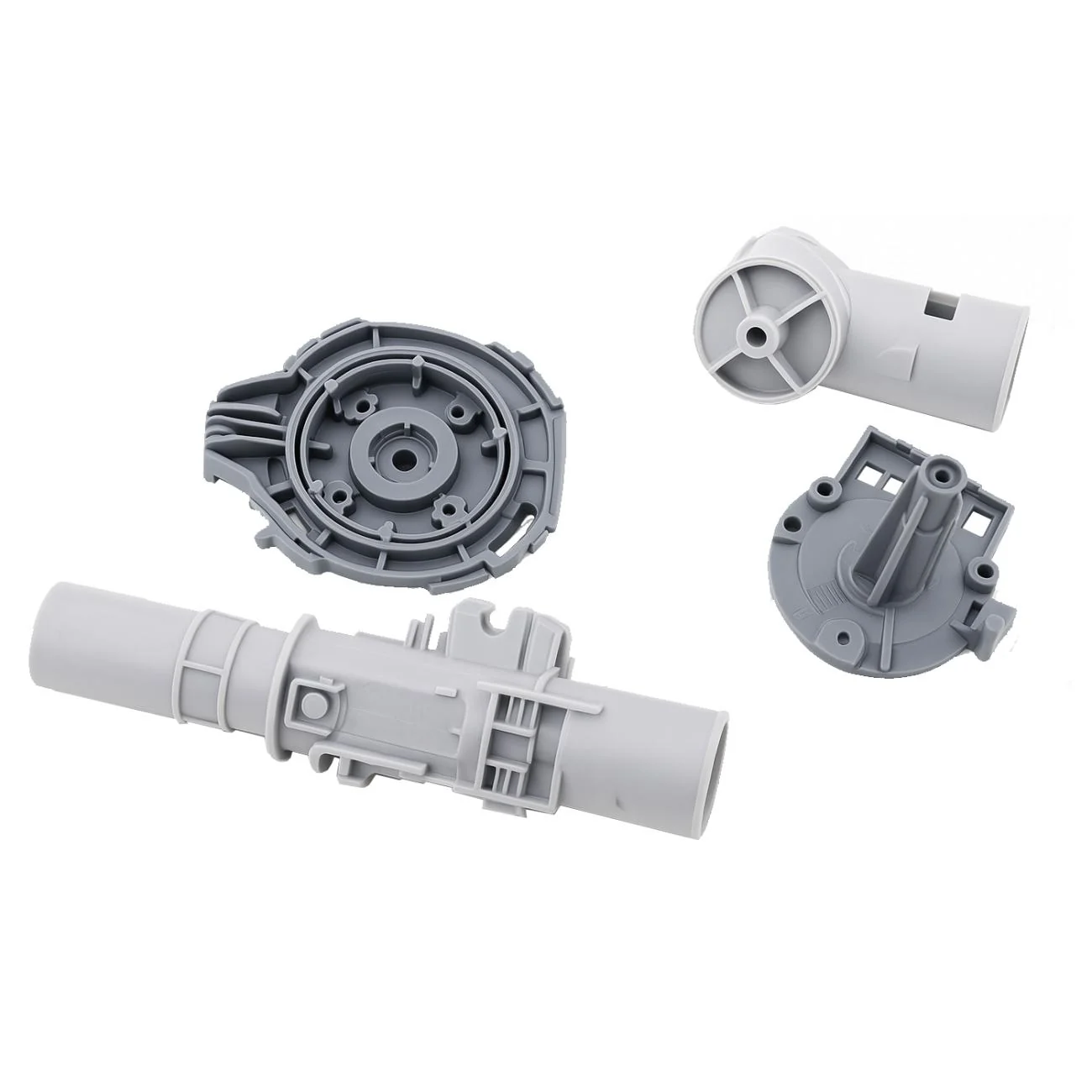
TPE pellets are melted, injected and cooled like thermoplastics. Grade-specific drying, melt temperature, shear, mold temperature, gate, venting and cooling affect fill, adhesion and appearance. Use regrind only when supplier guidance and the quality plan allow it.
05
Overmolding and bonding require a material pair, not a guess
Many projects use a flexible material over a rigid plastic or metal insert. Bond performance depends on both materials, surface condition, mold temperature, contact time, contamination, geometry and the selected grade. A TPE formulated for polypropylene may not bond to nylon or polycarbonate. An LSR may need a self-adhesive formulation, primer, surface treatment or mechanical retention. Supplier compatibility charts are useful starting points, not substitutes for molded bond testing.
Design mechanical interlocks, through-holes, undercuts or wraparound features when the bond must survive peel or when chemical adhesion is uncertain. Keep the soft layer reasonably uniform, provide gradual transitions and design positive shutoffs to control flash at the material boundary. Place the gate so flow does not trap air or peel across a weak interface. For an insert, define positional tolerance and how the tool will locate it without crushing or allowing flash.
06
Design details that affect moldability and quality
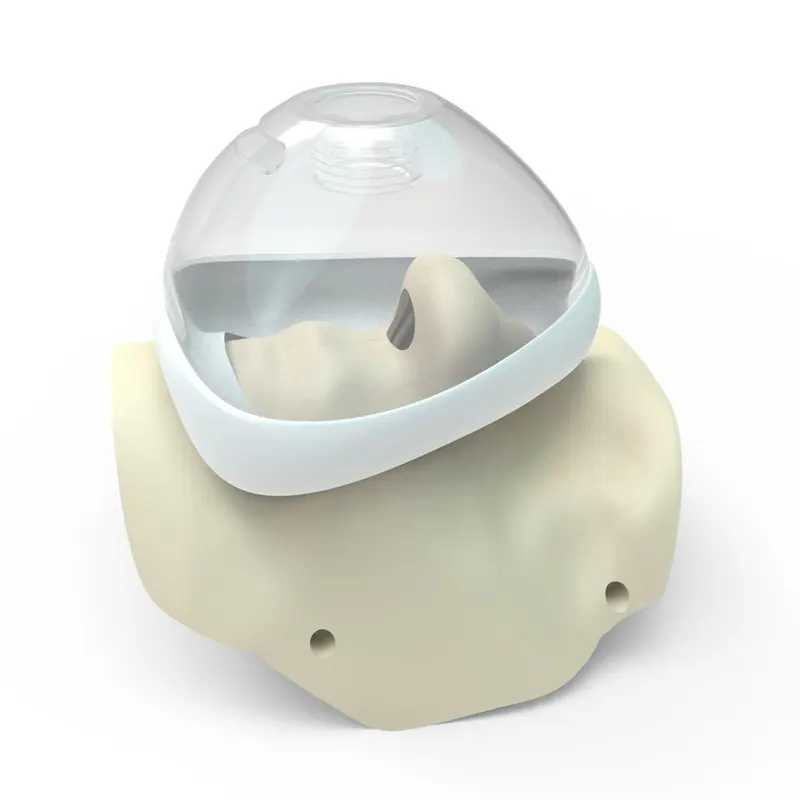
Flexible parts still need controlled wall thickness, draft, radii, gates, vents, parting lines and ejection. Thick regions extend cure or cooling; abrupt thin sections restrict flow; blind pockets can trap air. Use grade-specific supplier guidance and a part-specific DFM review.
LSR may flex over undercuts, but it must recover without tearing. Soft TPE can also deform during ejection. Add draft where the mold moves against the part, select texture with the material supplier and identify cosmetic faces, gate vestige, ejector evidence and acceptable flash.
07
Cost, quantity and development stage
Do not choose from resin price alone. LSR cost includes metering, heated tooling, cure and flash control; TPE cost includes preparation, cooling, shrinkage and any two-shot or insert handling. Cavitation, runner strategy, automation, inspection and yield can dominate unit cost.
If the design is changing and only a few parts are needed, tooling may be premature. Use prototypes to verify geometry and handling, but do not treat printed flexible resin as equivalent to production LSR or TPE. Stabilize geometry, material, forecast and validation before tool release.
08
What to specify on the drawing and RFQ
Send the STEP model and a controlled 2D drawing, then add a material and validation brief. If the exact grade is not yet selected, state the performance requirements and acceptable supplier families instead of inventing a generic ‘silicone’ or ‘TPE’ callout. Identify which requirements are mandatory and which remain targets for engineering review.
- Exact LSR or TPE grade when known, hardness scale and permitted colorant
- Continuous and peak temperatures, fluids, UV or ozone, sterilization and contact conditions
- Seal compression, motion, pressure, electrical, tactile, tear or abrasion requirements
- Rigid substrate or insert grade, surface condition, bond area and retention method
- Critical dimensions, datum scheme, flash limits, gate and parting-line restrictions
- Color standard, texture, cosmetic faces and allowed batch variation
- Prototype, validation and lifetime quantities plus cavity and automation assumptions
- Required material documents, inspection, functional tests, packaging and change control
09
Technical references
Supplier resources support the comparison; the exact grade data sheet and finished-part validation remain controlling.
10
Send your flexible molded part for engineering review
MIMCNC supports liquid silicone rubber and plastic injection molding projects based on customer drawings. Send the latest 2D drawing and STEP file with service conditions, material or hardness target, substrate, quantities, color, inspection and validation requirements. The team can review the open questions before a material, tooling route and quotation are confirmed.
Use the inquiry page or contact Julie Cai at juliecai@mimcnc.com and +86 136 7015 0900. Material, tooling and evidence are confirmed per project.
Frequently asked questions
Questions engineers and buyers ask before quotation.
Is LSR the same as TPE?+
No. LSR is a heat-cured thermoset silicone supplied as two liquid components. TPE is a broad family of thermoplastic elastomers that soften during melt processing and solidify during cooling.
Which is better for high-temperature service, LSR or TPE?+
LSR is often shortlisted for demanding temperature service, but the answer must use the exact grade, temperature, duration, load and environment. Some specialty TPEs may fit conditions that general-purpose grades do not.
Can both LSR and TPE be overmolded onto rigid plastic?+
Yes, with the correct material pair and process. Bonding may rely on compatible chemistry, a self-bonding grade, primer, surface treatment or mechanical interlocks. Test the molded assembly rather than assuming adhesion.
Which material is better for a seal or gasket?+
Either may work. Compare compression set, temperature, fluids, pressure, motion, gland design, surface finish and service life for the exact grades. LSR is a common candidate when long-term elastic recovery or environmental stability is important.
Can cured LSR be remelted or recycled like TPE?+
Cured LSR cannot be remelted because it is a thermoset. TPE is thermoplastic, but reprocessing clean scrap is allowed only when the grade, contamination controls and product quality requirements support it.
What information is needed to quote an LSR or TPE part?+
Provide the STEP model, 2D drawing, service environment, exact grade or performance targets, hardness, color, substrate or insert, quantities, critical dimensions, flash and appearance limits, testing and documentation requirements.
Plan the next step
Continue from guide to project review.

Julie Cai
Project contact connecting international customers with MIM Machining's manufacturing and engineering review team.
Contact Julie