
OD & ID Turning
External diameters, bores and concentric feature relationships.
Rotational parts and turned features
CNC turning is used for cylindrical components and concentric features such as diameters, shoulders, grooves, tapers and threads. Cross-holes, flats and slots may require live tooling or secondary milling, so the full part—not only the turned profile—must be reviewed.
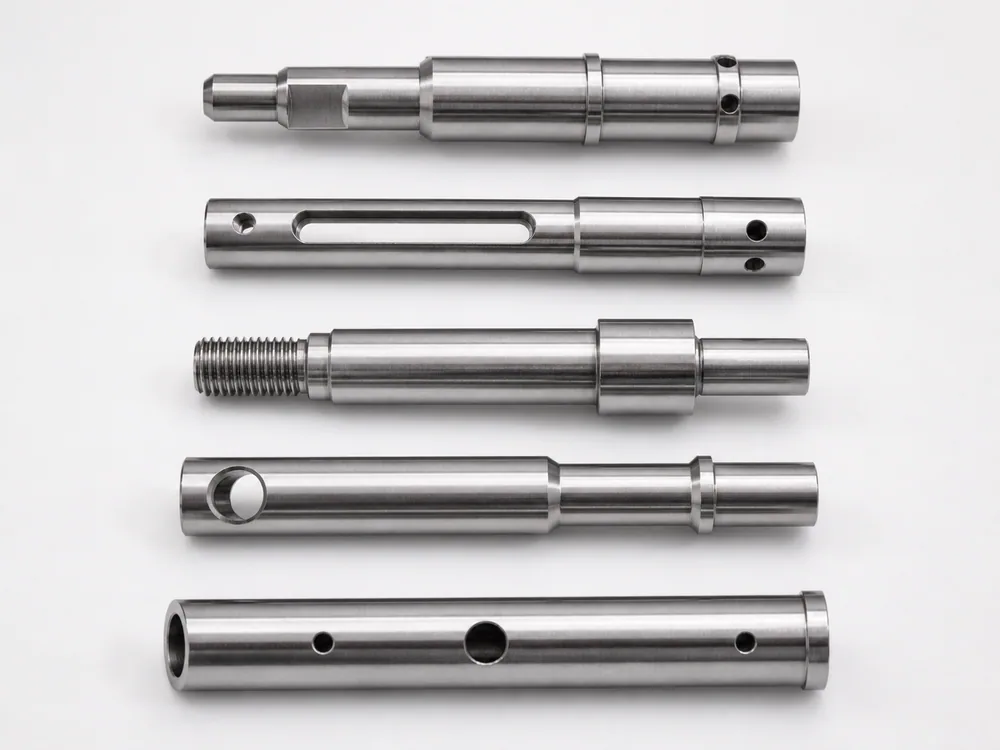
Process capabilities
These capability groups are a starting point. Final equipment, setup and inspection planning remain subject to drawing review.
External diameters, bores and concentric feature relationships.
External and internal threads, seal grooves and retaining features.
Cross-holes, flats and slots evaluated with the rotational geometry.
Repeat component concepts reviewed around stock size and production quantity.
Common part types
Part names are only a guide. Geometry, critical characteristics and quantity determine the actual manufacturing route.
Material planning
Suitable grades are reviewed for lightweight turned parts and fittings.
Common for corrosion-resistant shafts, sleeves and fluid components.
Considered for fittings and components requiring conductivity or machinability.
Material stability, burr control and clamping behavior require project review.
RFQ checklist
A focused quotation starts with the current revision and identifies which features matter most to function and acceptance.
Start Your Project ReviewFrequently asked questions
Project-specific answers require the controlled drawing, material and quantity.
Turning rotates the workpiece and is commonly used for cylindrical geometry. Milling rotates the cutter and is commonly used for prismatic features. Some parts require both operations.
Yes, these features may be produced with live tooling or secondary milling depending on geometry, quantity and machine selection.
Identify the thread standard, size, class, gauge or inspection requirement, mating component and any coating allowance.
Both can be reviewed. Providing prototype and expected repeat quantities helps evaluate stock, setup and process choices.
Upload the current drawing, material, quantity and critical requirements for a focused manufacturing review.