
Part & material review
Geometry, target material properties, section balance, annual demand and critical dimensions are reviewed to determine whether MIM is a suitable route.
Metal Injection Molding
Drawing-led metal injection molding projects for small complex metal components, with material, tooling, debinding, sintering and secondary-operation requirements reviewed together.
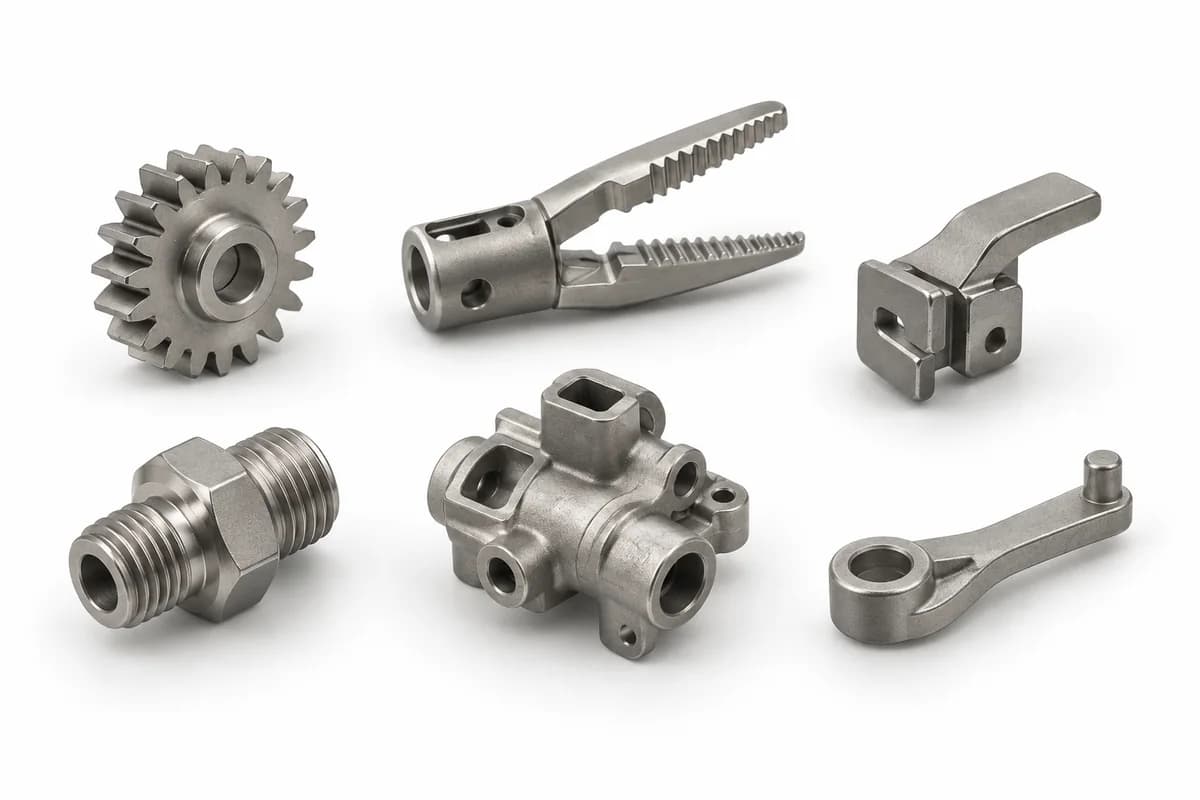
Capability overview
Metal injection molding combines injection molding of metal-powder feedstock with debinding and sintering. MIM Machining reviews part geometry, material requirements, production demand, shrinkage strategy, secondary operations and inspection before confirming the manufacturing route.
Project workflow
Geometry, target material properties, section balance, annual demand and critical dimensions are reviewed to determine whether MIM is a suitable route.
Cavity strategy, gates, parting line, ejection, sintering support and process-specific shrinkage compensation are considered before tooling.
Feedstock is molded into a green part, the binder is removed, and the component is sintered under a material-appropriate controlled process.
Sizing, machining, heat treatment, surface finishing and inspection are defined according to the drawing and application.
Product examples
Images illustrate the component families and application context relevant to this capability.
Materials
Applications
Surface finishing
Anodizing, coating, plating, passivation and mechanical finishes can affect dimensions, masking, color and inspection. Compare the options before submitting your RFQ.
Compare surface finishesMolding & tooling
Plastic injection molding, metal injection molding, export molds, metal stamping and die casting have different material, geometry, volume and ownership requirements.
Compare molding and tooling optionsFrequently asked questions
Project-specific capability depends on the drawing, material, quantity and inspection requirements.
Read the RFQ checklistMetal injection molding uses fine metal powder combined with a binder as an injectable feedstock. After molding, the binder is removed and the part is sintered to develop the final metal structure and properties.
MIM is commonly considered for relatively small, complex parts where production demand can justify dedicated tooling. Final suitability depends on material, section thickness, geometry, tolerances, secondary operations and quantity.
The molded green part changes size as binder is removed and the metal structure densifies during sintering. Tool dimensions, geometry balance, supports and inspection strategy must account for this process-specific behavior.
Send the 3D model and controlled drawing with material or property requirements, annual demand, critical dimensions, appearance needs, secondary operations, inspection and documentation requirements.
Send the key project details and our manufacturing team will respond with a focused next step.