
Part & volume review
Drawing geometry, material condition, sheet thickness, annual demand, burr direction, flatness and cosmetic surfaces are reviewed.
Metal Stamping
Custom metal stamping projects for blanked, pierced, bent, drawn and formed sheet-metal parts, with tooling, material condition, burr, flatness, finishing and inspection requirements reviewed together.
Capability overview
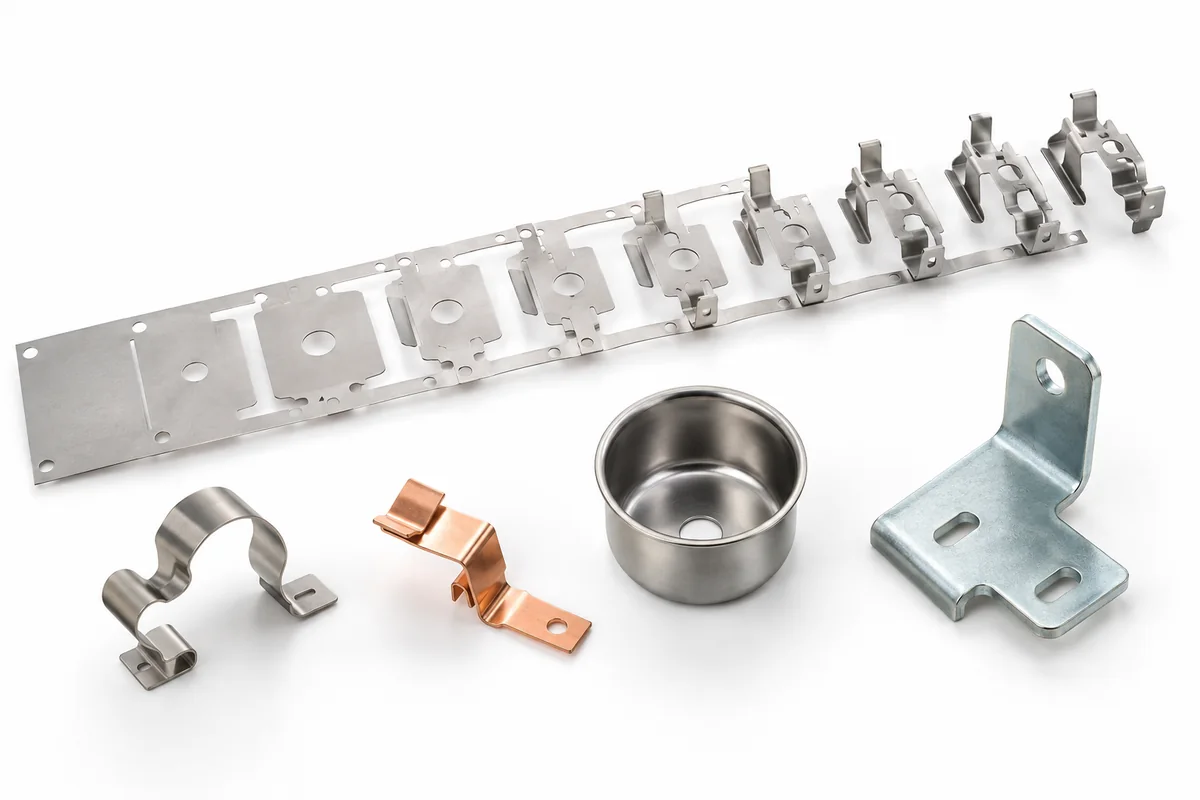
Metal stamping uses dedicated dies to convert sheet or coil into repeat components. MIM Machining reviews material, thickness, grain direction, geometry, annual demand, die concept, secondary operations and inspection before confirming the tooling and production route.
Project workflow
Drawing geometry, material condition, sheet thickness, annual demand, burr direction, flatness and cosmetic surfaces are reviewed.
The team evaluates forming sequence, strip layout, bend and draw behavior, carrier design, die type, press interface and inspection datums.
Tool construction and trial samples are planned around feature development, forming stability and agreed approval criteria.
Stamping, deburring, tapping, welding, finishing, cleaning and inspection are coordinated according to the controlled drawing.
Product examples
Images illustrate the component families and application context relevant to this capability.
Materials
Applications
Surface finishing
Anodizing, coating, plating, passivation and mechanical finishes can affect dimensions, masking, color and inspection. Compare the options before submitting your RFQ.
Compare surface finishesMolding & tooling
Plastic injection molding, metal injection molding, export molds, metal stamping and die casting have different material, geometry, volume and ownership requirements.
Compare molding and tooling optionsFrequently asked questions
Project-specific capability depends on the drawing, material, quantity and inspection requirements.
Read the RFQ checklistBlanking, piercing, bending, forming, coining and selected drawing operations can be reviewed. The final process depends on geometry, material, thickness, tool access, quantity and acceptance requirements.
A progressive die may be considered when several operations can be sequenced along a strip and the production demand supports dedicated tooling. Part geometry, feed pitch, carrier strength and press requirements must be evaluated.
Blanking and piercing create an edge condition that may affect assembly, handling, electrical contact or appearance. Identify controlled edges, burr limits and required deburring in the drawing.
Provide the 3D model and drawing with material grade and temper, thickness, quantities, annual forecast, critical dimensions, burr and flatness limits, finish, inspection and packaging requirements.
Send the key project details and our manufacturing team will respond with a focused next step.