6061 and 7075 are both established aluminum alloys for CNC machined parts, but they solve different engineering problems. The practical decision is not simply “general purpose versus aerospace.” It depends on load, stiffness, corrosion exposure, joining, finishing, stock form, dimensional stability and the evidence required on the drawing.
Key takeaways
Choose 6061 when balanced strength, corrosion resistance, welding, availability and total cost matter more than maximum strength.
Choose 7075 when the design genuinely needs higher static or fatigue strength at low weight and the corrosion, joining and cost tradeoffs are acceptable.
Specify the complete alloy, temper, product form and governing material standard; “6061 aluminum” or “7075 aluminum” alone is not a complete purchasing requirement.
01
The short answer: 6061 for versatility, 7075 for higher strength
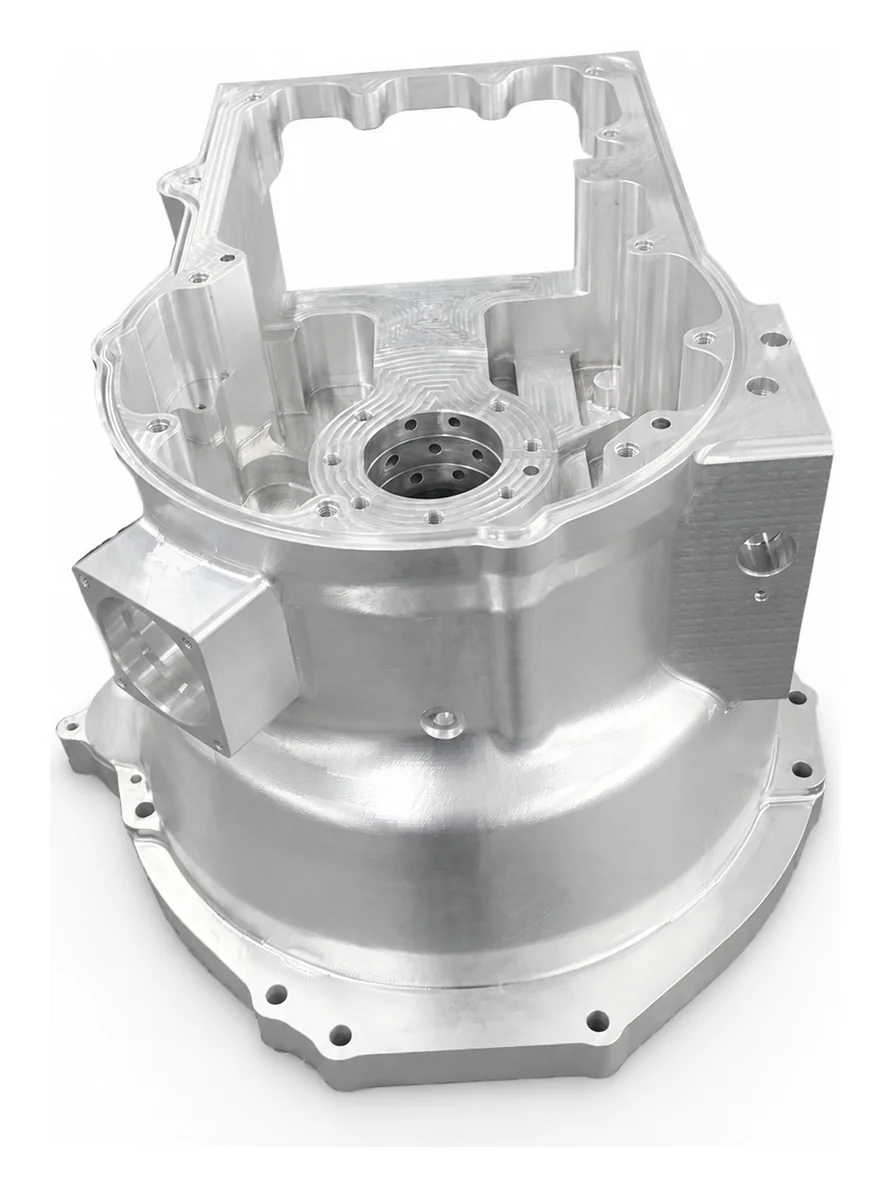
For many machined brackets, housings, fixtures, manifolds and equipment components, 6061-T6 or stress-relieved 6061-T651 provides a practical balance of strength, corrosion resistance, finish response, availability and manufacturing cost. It is also the clearer starting point when welding is part of the assembly route.
7075-T6 or T651 is selected when higher strength and fatigue performance justify greater material cost and more careful corrosion and joining decisions. It is common in highly loaded structural parts, but the alloy name alone does not make a design aerospace-ready. The engineer must still define load cases, grain direction where relevant, temper, material specification, inspection and surface protection.
02
Understand alloy series, temper and product form before comparing data
6061 belongs to the heat-treatable 6xxx family, in which magnesium and silicon are the principal alloying additions. 7075 belongs to the 7xxx family and uses zinc with magnesium and copper to achieve substantially higher strength. That chemistry also changes corrosion behavior, weldability, finishing response and raw-material price.
The suffix matters. T6 indicates solution heat treatment followed by artificial aging. T651 adds stress relief by stretching after solution treatment, which can improve dimensional behavior in plate. Other 7075 tempers, such as T7351, trade some peak strength for improved stress-corrosion resistance. Sheet, plate, bar, extrusion and forging can have different allowable properties even when the alloy and temper labels look similar.
For quotation, match the material callout to the stock form and thickness actually required. If a drawing uses design allowables, the applicable standard and product form must agree with the engineering analysis rather than relying on a generic internet property table.
03
6061-T651 vs 7075-T651: typical property comparison
The values below are typical room-temperature data for Kaiser Aluminum sheet, coil and plate products. They are useful for early comparison, not for final design certification. Minimum guaranteed properties vary with specification, product form, thickness, orientation and supplier; use the governing standard and material certificate for released parts.
| Property | 6061-T6 / T651 | 7075-T651 | Design meaning |
|---|---|---|---|
| Ultimate tensile strength | 310 MPa typical | 572 MPa typical | 7075 supports higher tensile loading when the design and product form qualify it. |
| Yield strength | 276 MPa typical | 503 MPa typical | 7075 provides more resistance to permanent deformation. |
| Elongation | 17% typical | 11% typical | 6061 generally provides more ductility in this comparison. |
| Brinell hardness | 95 typical | 150 typical | 7075 is harder; tool wear and edge condition still depend on the machining route. |
| Elastic modulus | 68.3 GPa typical | 71.0 GPa typical | Stiffness is similar; geometry often controls deflection more than this alloy change. |
| Density | 2.70 Mg/m³ nominal | 2.80 Mg/m³ nominal | 7075 is slightly denser, so equal-volume parts are slightly heavier. |
| Thermal conductivity | 167 W/m·K typical | 130 W/m·K typical | 6061 is usually the stronger choice when heat spreading is important. |
04
How the alloys differ during CNC machining
Both alloys can be CNC milled, turned and drilled successfully with suitable tools, workholding, coolant strategy and chip evacuation. 7075 often produces a clean machined surface and stable chips, but its greater hardness and strength increase cutting load and can accelerate tool wear. 6061 is widely available and economical, although poor tool geometry or built-up edge can still damage finish and burr control.
Part geometry matters more than a generic machinability score. Thin walls, deep pockets and large material-removal ratios release residual stress and reduce stiffness during machining. For plate-heavy parts, T651 or another appropriate stress-relieved product is often more relevant than choosing between alloy numbers alone. Balanced roughing, intermediate stress release where justified, stable fixturing and finish passes after the part stabilizes can reduce distortion risk.
Strength is not the same as stiffness
7075-T651 is much stronger than 6061-T651, but their elastic moduli are close. If a plate bends too much under normal elastic loading, changing to 7075 without changing geometry may deliver only a small stiffness improvement. Increasing section depth, adding ribs or changing support conditions may be more effective. Use 7075 when allowable stress or fatigue is the controlling problem, not as an automatic cure for deflection.
Thin walls and precision features need a process plan
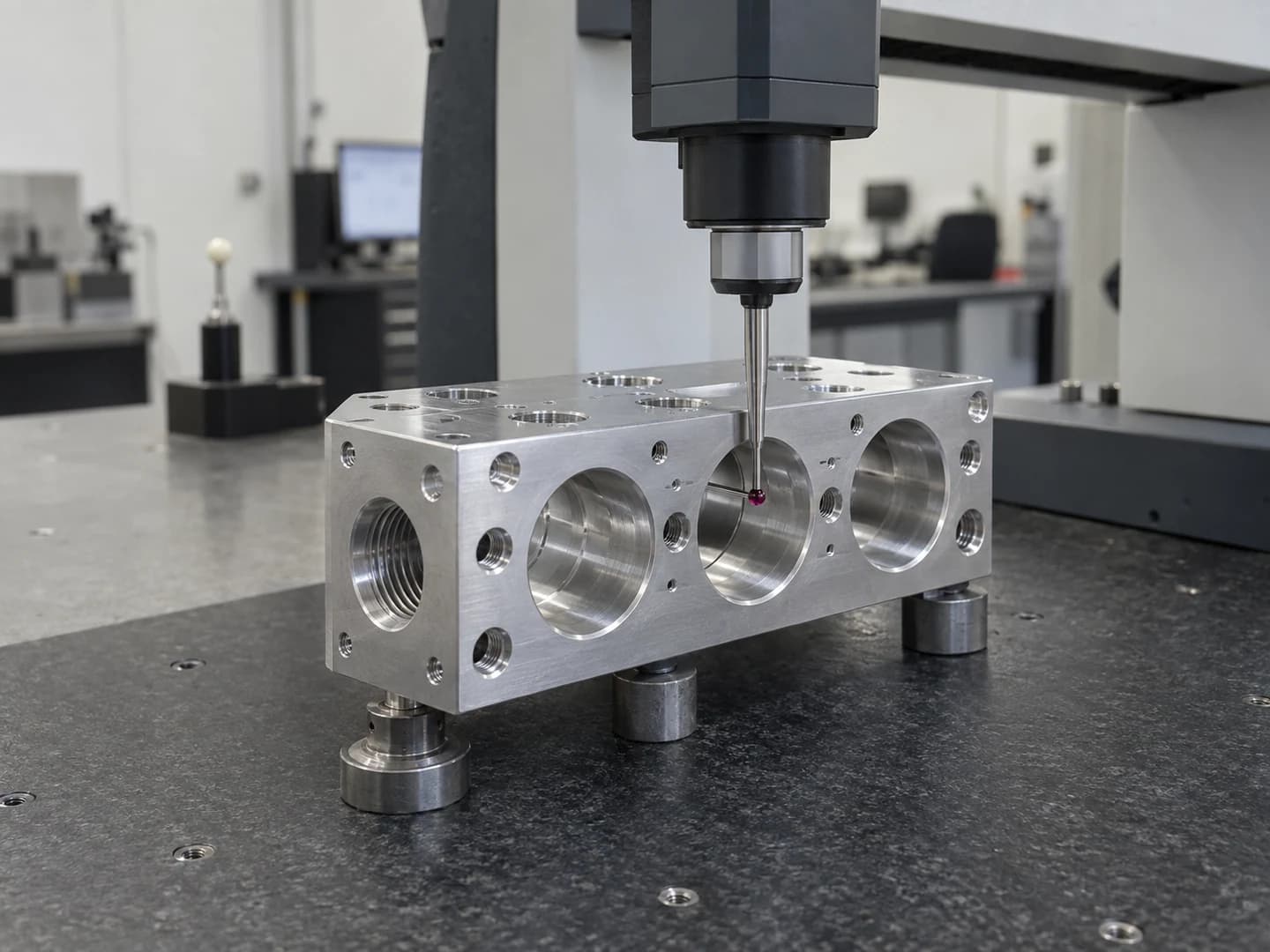
A rigid alloy can still move when clamps are released. Identify flatness, parallelism, bore alignment and sealing faces on the drawing, then discuss datum strategy and inspection state. Requirements measured while clamped may not represent the free-state part. For large housings, the stock condition and machining sequence should be reviewed before quotation.
05
Corrosion, welding and surface finishing tradeoffs
Material selection continues after the cutting operation. Exposure, joining and appearance requirements can make a lower-strength alloy the more reliable system choice.
Corrosion and stress-corrosion considerations
6061 generally provides better inherent corrosion resistance than 7075-T6. High-strength 7xxx alloys require closer attention to sustained tensile stress, grain direction and corrosive exposure. If stress-corrosion resistance is critical, a temper such as 7075-T7351 may be considered, with the associated reduction in peak strength reviewed by the design engineer. Protective finishing does not replace correct alloy and temper selection.
Welding and joined assemblies
6061 is commonly fusion welded using qualified procedures, although the heat-affected zone loses T6 strength unless the design and any post-weld treatment account for it. Conventional fusion welding of 7075 is generally avoided because of crack sensitivity and loss of properties. Bolted, riveted or bonded joints are often evaluated instead when a high-strength 7075 component must join an assembly.
Anodizing and cosmetic expectations
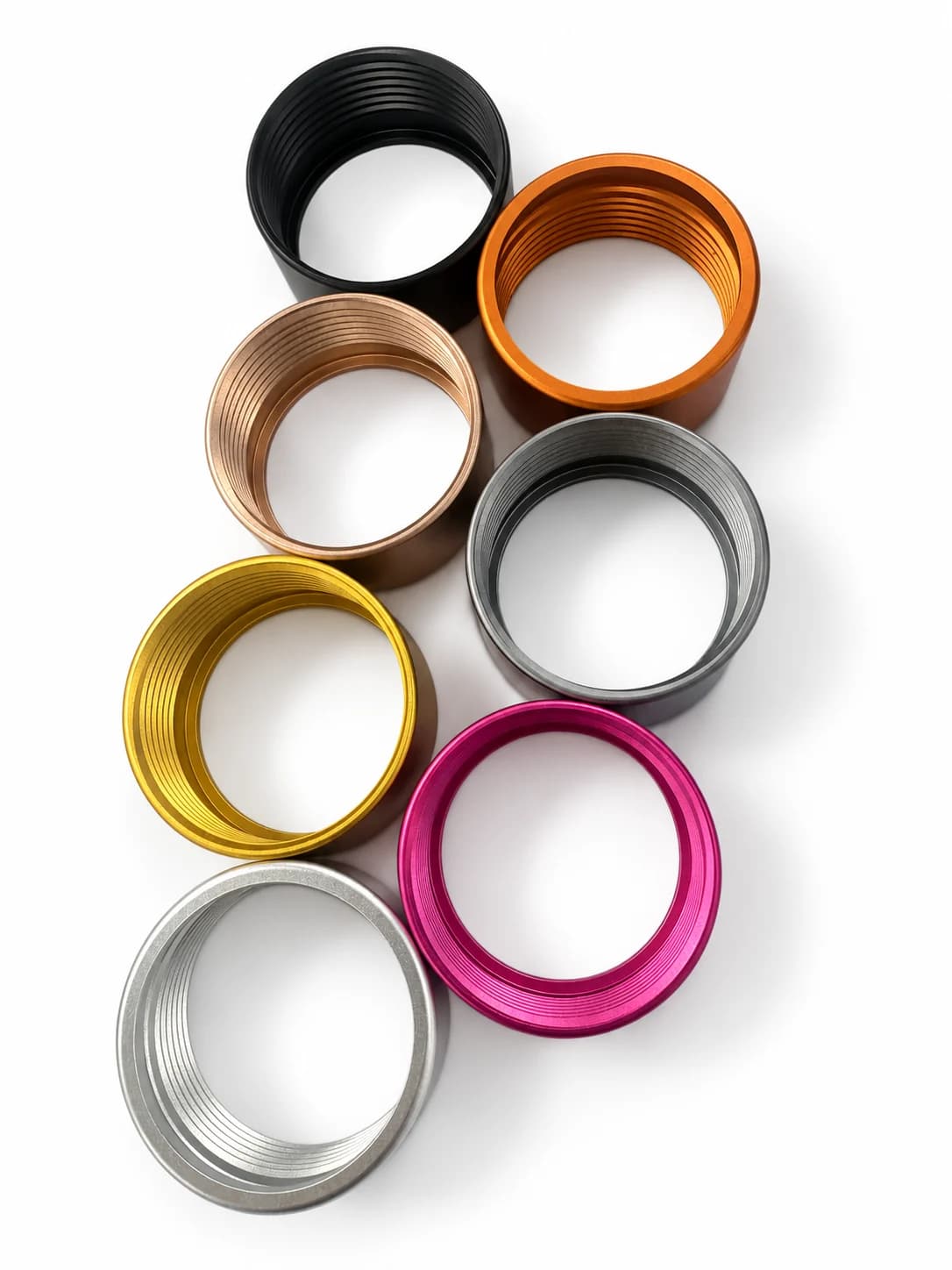
Both alloys can be anodized, but they should not be expected to match. 6061 usually gives a more predictable cosmetic response, while the zinc- and copper-rich 7075 composition can produce a darker or less uniform tone. Clear anodizing is not colorless, and dyed color varies with alloy, pretreatment, surface texture, coating thickness and batch. Keep mating fits, threads, electrical contacts and sealing surfaces in the masking and dimensional plan.
06
Cost, availability and when each alloy is the better choice
6061 is typically easier to source across plate, bar and extrusion forms and usually has a lower raw-material cost. That availability can reduce minimum purchases and simplify repeat sourcing. 7075 carries a higher material cost, and the selected temper, size and certification requirement may narrow the supply base. Machining cost can also rise through slower parameters, tool wear or additional distortion-control steps.
Do not compare price per kilogram alone. A stronger alloy can enable a smaller or lighter component, while an unnecessary 7075 callout can add cost without improving function. The useful comparison is total part cost at the required performance: stock, machining time, scrap risk, finishing, inspection, documentation and expected quantity.
- Choose 6061 for general housings, fixtures, brackets, manifolds, welded structures and parts that value heat transfer or predictable cosmetic anodizing.
- Choose 7075 for highly loaded lightweight components, demanding structural interfaces and fatigue-sensitive parts when the engineer has justified the alloy and temper.
- Reconsider both if temperature, wear, chemical exposure, electrical behavior or regulatory requirements point to another aluminum alloy, steel, titanium, copper alloy or engineering plastic.
07
What to specify on the drawing and RFQ
A quote-ready package should remove ambiguity between material selection and manufacturing assumptions. Send the controlled 2D drawing with the STEP model and state the intended production stage, quantities and required documentation. If equivalent material is allowed, define the properties and standards that must remain equivalent rather than using “or similar” without criteria.
- Complete alloy, temper and product form, such as 6061-T651 plate or 7075-T7351 plate
- Governing material specification and whether a material certificate or lot traceability is required
- Critical dimensions, datums, geometric tolerances and free-state inspection conditions
- Surface finish, anodizing type, coating thickness, color and masking requirements
- Load, fatigue, corrosion, temperature and electrical or thermal requirements relevant to the choice
- Prototype and production quantities, approved substitutions and any first-article reporting
08
Technical references
The comparison was checked against current alloy-designation guidance and manufacturer technical data. Property values remain conditional on product form, thickness, temper and specification.
09
Send your aluminum part for engineering review
MIMCNC supports precision CNC milling, turning and five-axis machining for custom metal components. Send the latest 2D drawing and STEP file with the material callout, quantities, critical features and finishing requirements. The team can review whether the requested alloy, temper, stock form and machining route are consistent before quotation.
Use the online inquiry page or contact Julie Cai at juliecai@mimcnc.com and +86 136 7015 0900. Material availability, documentation, finishing and inspection scope are confirmed for the individual project rather than assumed from a generic material list.
Frequently asked questions
Questions engineers and buyers ask before quotation.
Is 7075 aluminum always better than 6061?+
No. 7075-T651 is much stronger, but 6061 often offers better corrosion resistance, welding, thermal conductivity, availability and cost. The correct choice follows the controlling requirement.
Which alloy is easier to CNC machine?+
Both machine well with the correct process. 7075 often cuts cleanly but creates higher cutting loads and tool wear; 6061 is economical and available but still needs sharp tools and built-up-edge control.
Is 7075 stiffer than 6061?+
Only slightly. Their elastic moduli are close, so changing geometry is usually more effective than changing between these alloys when elastic deflection is the main problem.
Can 6061 and 7075 be welded?+
6061 is commonly fusion welded with a qualified design and procedure, while conventional fusion welding of 7075 is generally avoided. Account for heat-affected-zone strength in 6061 assemblies.
Can both alloys be anodized?+
Yes, but appearance can differ. 6061 generally gives a more predictable cosmetic result; 7075 may appear darker or less uniform. Define type, thickness, color, sealing and masking.
Should the drawing call out T6 or T651?+
Yes. Temper and product form affect strength and dimensional behavior. For plate with heavy machining, a stress-relieved temper such as T651 may be preferable, subject to the design specification.
Plan the next step
Continue from guide to project review.

Julie Cai
Project contact connecting international customers with MIM Machining's manufacturing and engineering review team.
Contact Julie