Surface finishing is not simply a cosmetic step after machining. The selected process can change corrosion behavior, wear resistance, electrical contact, color, texture and final dimensions. This guide gives engineers, product designers and buyers a practical framework for specifying surface finishing for machined parts without treating any finish as universally best.
Key takeaways
Choose the finish from the base material, service environment, functional surfaces and tolerance plan—not from appearance alone.
Coating thickness, masking, rack points, color expectations and batch variation should be agreed before quotation and production.
A controlled 2D drawing plus a STEP model gives the machining and finishing team the information needed to review the complete part.
01
Why CNC machined parts need surface finishing
A machined component may meet its dimensions but still need corrosion protection, wear resistance, electrical function, cleanability, lower glare or a consistent appearance. The best choice depends on alloy, preparation, geometry, thickness, sealing and exposure—not only the process name. Corrosion and wear descriptions below are comparative guidance, not guaranteed ratings; any salt-spray, hardness, color or thickness requirement should be tied to an applicable specification and confirmed during quotation.
02
Applied coatings and plated finishes
Applied coatings add a distinct layer over the machined surface. They can provide color, environmental protection or a functional metal deposit, but they also add thickness and may require masking on threads, bores, sealing faces and electrical contacts.
Powder coating
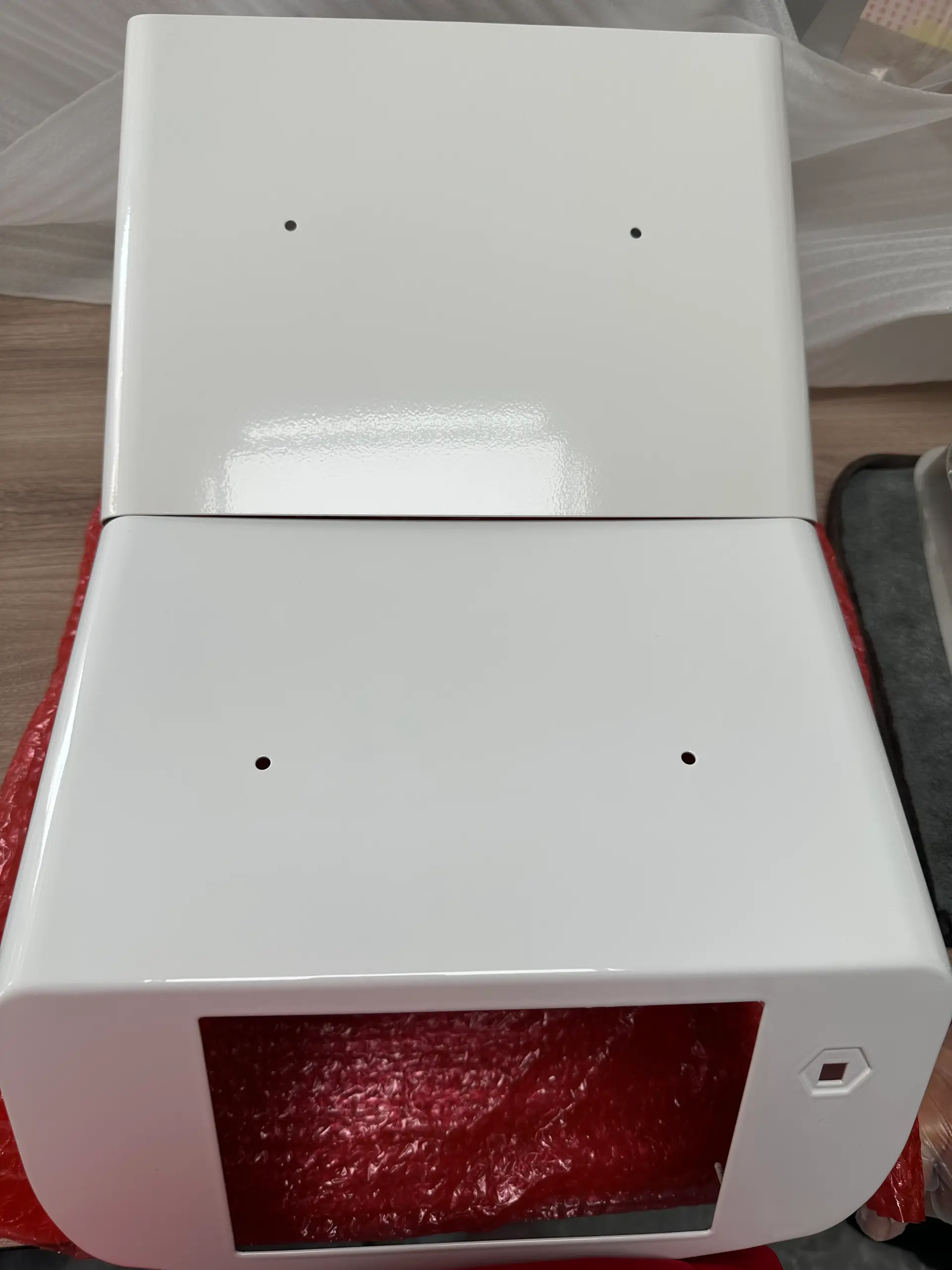
Powder coating applies a dry polymer powder, commonly by electrostatic spray, then heat-cures it into a continuous film. It is widely used on aluminum and steel housings, brackets and panels for color and environmental protection. The comparatively thick film can interfere with fits, small threads, grounding areas and sharp internal details, so these features may need allowance or masking. Pretreatment, geometry and cure all influence protection and appearance.
Spray painting or wet painting
Wet paint atomizes a liquid coating that cures by evaporation, chemical reaction or a controlled bake. It suits many metals and compatible plastics and offers broad color and gloss choices. Resistance to abrasion, chemicals and weather depends on the primer, chemistry, cure and film thickness; runs and edge coverage also need control. Specify the paint system and color standard rather than only requesting “black paint.”
Electroplating: zinc, nickel and chrome
Electroplating uses electrical current to deposit metal on a conductive part. Zinc commonly provides sacrificial protection for steel; nickel can add corrosion resistance, hardness and a bright or satin appearance; chrome systems may serve decorative or engineering purposes. Thickness follows current distribution, so edges and recesses can differ. Base material, underlayers, post-treatments and hydrogen-embrittlement controls for susceptible high-strength steels require project review.
Electroless nickel plating
Electroless nickel deposits through controlled chemical reduction without applied current, giving more uniform coverage on recesses and complex geometry than conventional electroplating. It can be used on properly prepared steel, aluminum and copper alloys. Phosphorus content, heat treatment and thickness influence corrosion and wear behavior. Because every coated surface builds dimension, precision bores, threads and fits need an explicit allowance or masking plan.
03
Anodic, conversion and black oxide finishes
These treatments create or convert a surface layer through a chemical or electrochemical reaction. They generally follow the base material closely, but they still affect dimensions, color and surface texture and must be specified with the same care as an added coating.
Anodizing for aluminum
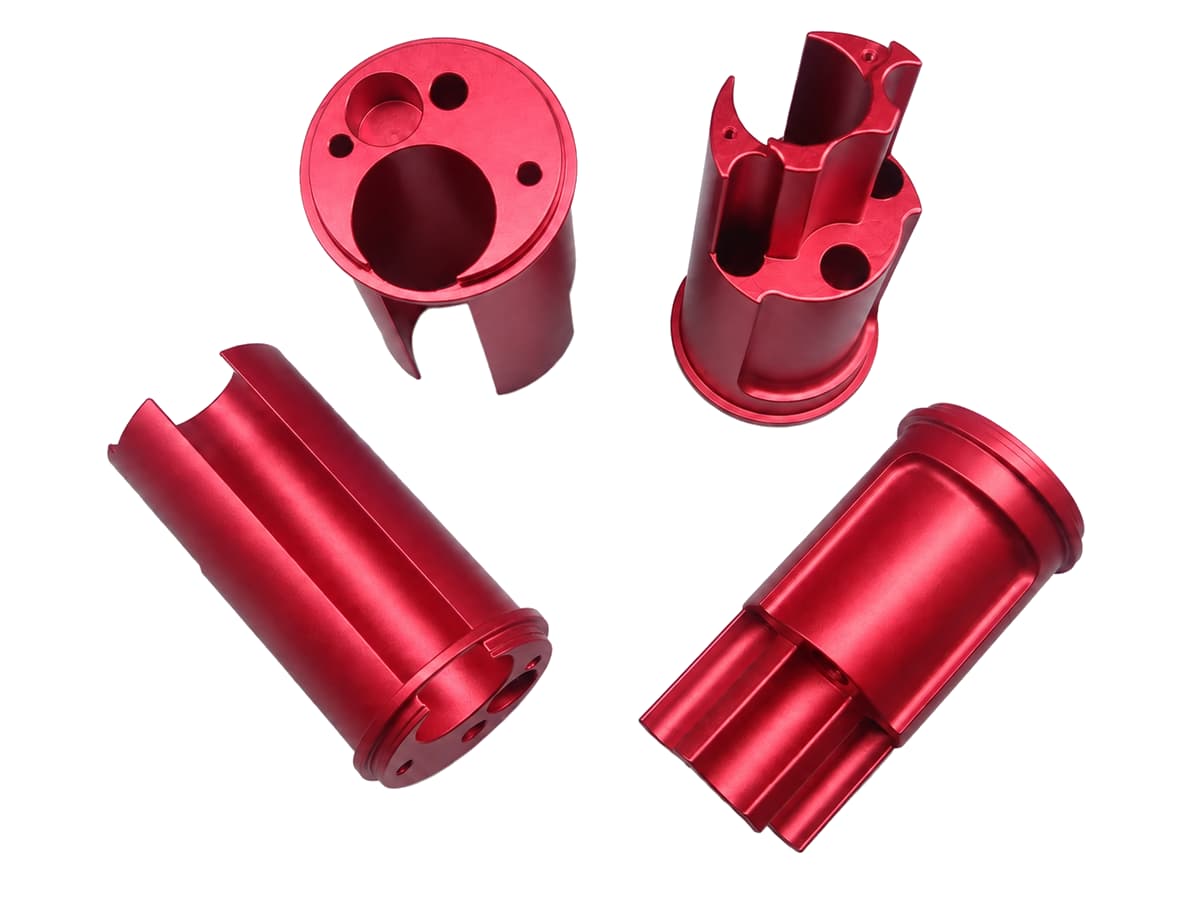
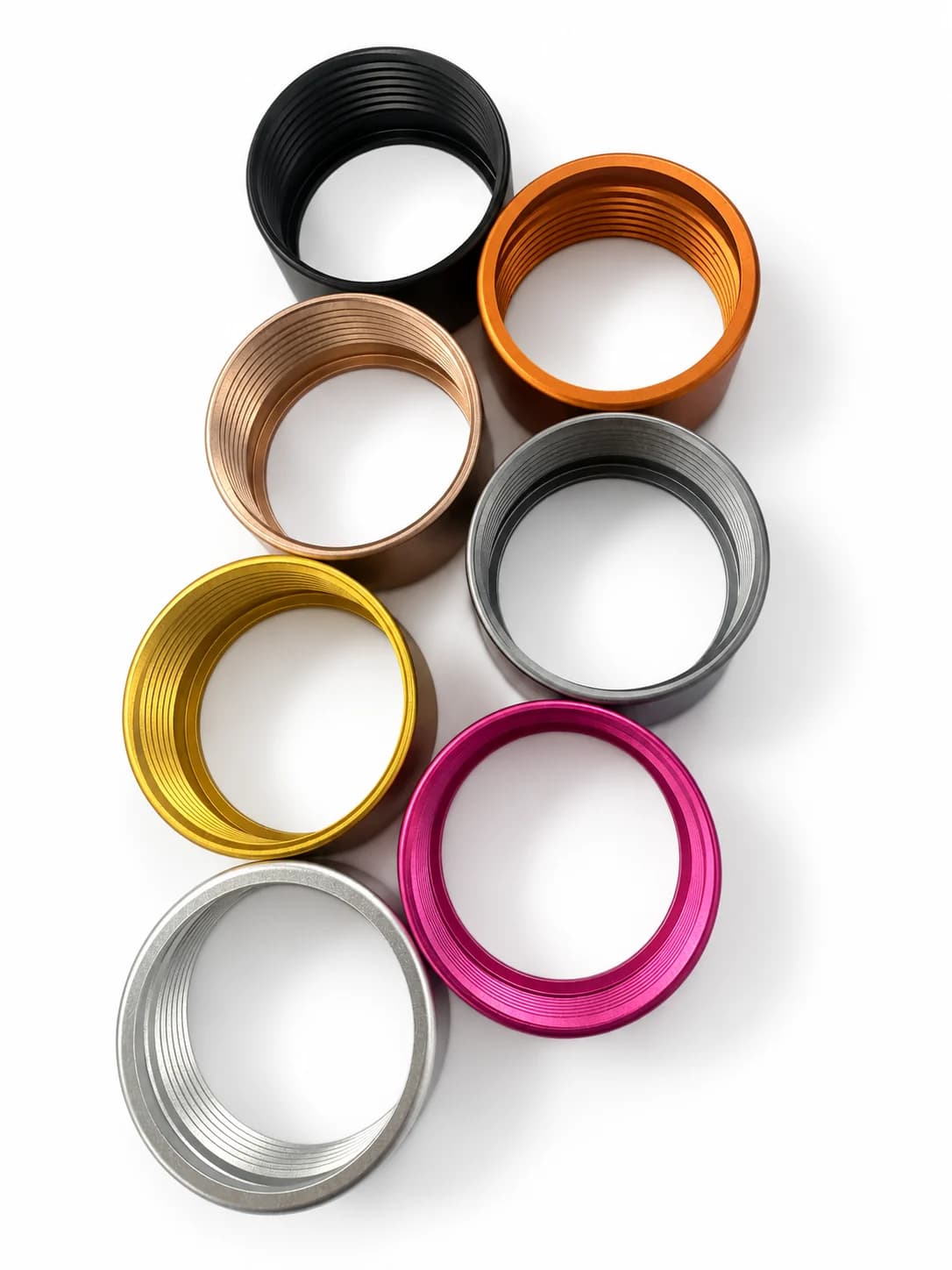
Anodizing converts aluminum into a controlled oxide layer. Conventional sulfuric anodizing supports corrosion protection and clear or dyed colors; hard anodizing creates a thicker, harder layer for wear-oriented use. Alloy, temper, machining marks, pretreatment and thickness affect the shade. Because the oxide grows partly into and partly above the surface, drawings should identify critical features and specify type, thickness, color, sealing and the applicable standard.
Chemical conversion coating
Chemical conversion coating forms a thin layer on aluminum. It can provide corrosion protection, prepare the surface for paint, or preserve lower electrical contact resistance with much less dimensional change than anodizing. It is not a wear coating. Chemistry may be clear, iridescent or yellow, and specifications distinguish systems and classes for different corrosion or electrical requirements. State the required standard and class on the drawing.
Black oxide
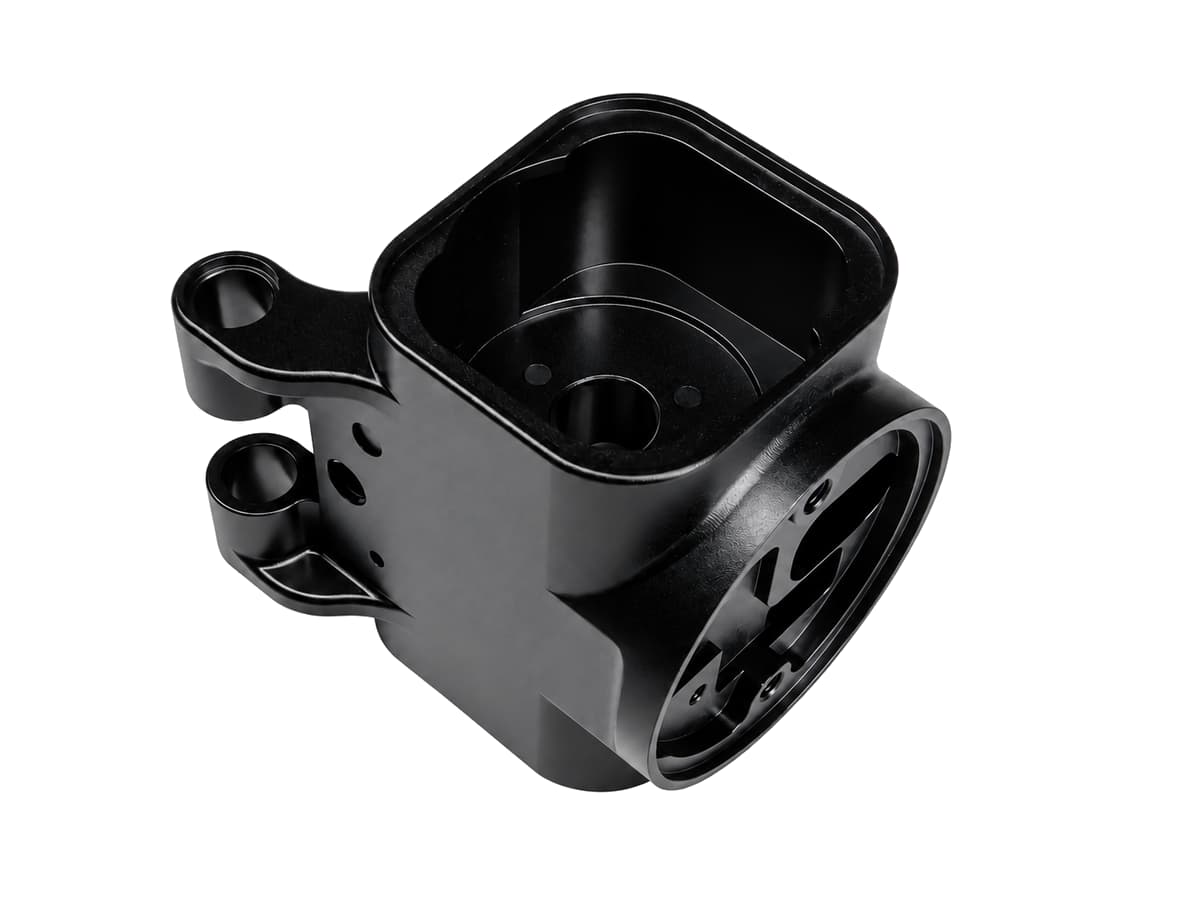
Black oxide is mainly used on ferrous parts to create a dark, low-reflectivity surface with minimal dimensional change. It can suit tools, fixtures and machine components, usually with oil, wax or another preservative. Protection is limited compared with many plated or painted systems, so it is not a default choice for severe outdoor exposure. Alloy, heat treatment and preparation also influence appearance.
04
Mechanical and stainless steel surface treatments
Mechanical finishing changes texture by controlled abrasion, while stainless steel treatments can remove contamination or selectively smooth the surface. Direction, media, access and starting surface condition all influence the result.
Bead blasting and how it differs from sandblasting
Bead blasting propels spherical media, often glass bead, to create a matte or satin texture on aluminum or stainless steel. Media, pressure and dwell determine texture and edge rounding. “Sandblasting” is often a broad term, but angular abrasive generally cuts more aggressively and leaves a rougher profile than spherical bead. Media must be material-compatible because contamination can create later corrosion problems, especially on stainless steel.
Polishing and brushing
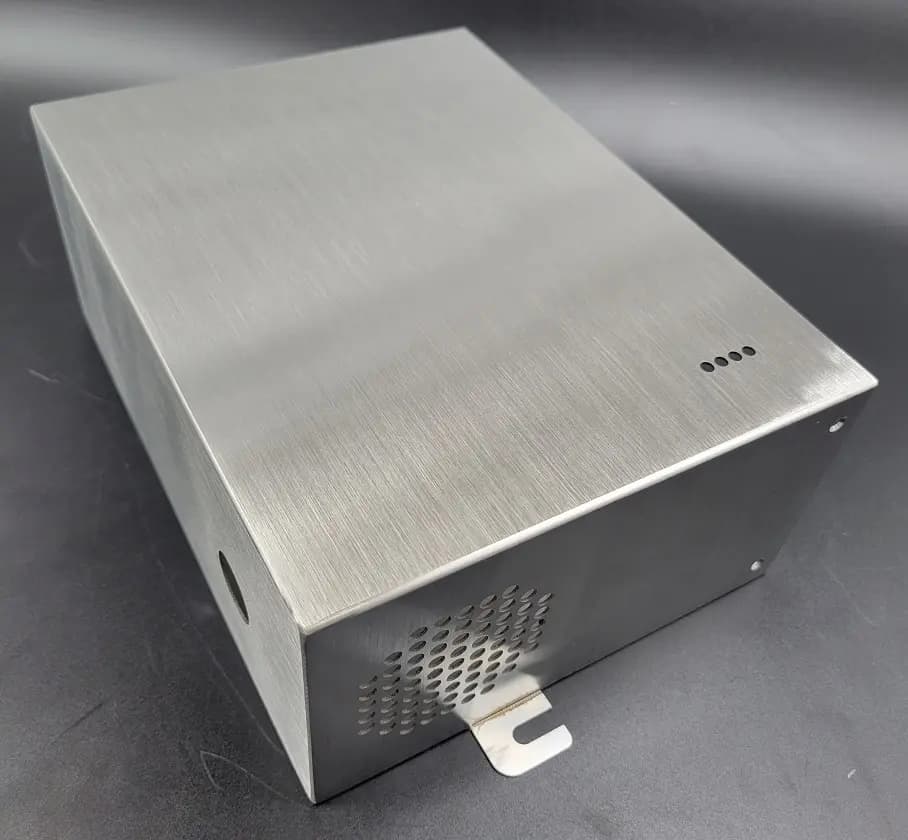
Polishing progressively reduces roughness for a smooth or reflective surface, while brushing creates directional grain. Both are common on stainless steel and aluminum when appearance or cleanability matters. They remove material and can soften edges or change small features; access also limits consistency inside pockets. Define grain direction, the approved sample and cosmetic faces.
Passivation of stainless steel
Passivation chemically removes free iron and contaminants from stainless steel and supports its protective passive surface. It adds no metal layer and normally has negligible dimensional effect. Specify the stainless grade, chemistry and verification test under an applicable standard such as ASTM A967/A967M. It does not hide machining marks or compensate for an unsuitable alloy.
Electropolishing
Electropolishing electrochemically removes metal, preferentially reducing microscopic peaks. On stainless steel it can improve smoothness, cleanability and brightness while supporting passivation under the relevant requirement. Because it removes material, edges, threads and small features need review. Alloy, starting roughness, current distribution and fixturing affect the result; it will not correct deep scratches or poor machining.
05
Comparison of common CNC machining surface finishes
The table below is a screening tool, not a substitute for a process specification. “Relative cost” assumes comparable geometry and quantity; corrosion and wear performance can change substantially with material, pretreatment, thickness, sealing, topcoat and service environment.
| Process | Typical materials | Appearance | Corrosion | Wear | Dimensional effect | Relative cost |
|---|---|---|---|---|---|---|
| Powder coating | Aluminum, steel | Colored; matte to gloss | Moderate to high with suitable pretreatment | Moderate | High; masking often required | Medium |
| Wet painting | Metals, compatible plastics | Wide color and gloss range | Low to high by paint system | Low to moderate | Moderate | Low to medium |
| Electroplating | Conductive metals | Metallic; finish depends on deposit | Varies by zinc, nickel or chrome system | Varies | Low to moderate; uneven buildup possible | Low to high |
| Electroless nickel | Steel, aluminum, copper alloys | Uniform metallic gray to bright | Moderate to high by chemistry and thickness | Moderate to high | Controlled, relatively uniform buildup | Medium to high |
| Anodizing | Aluminum | Clear, colored or dark hard coat | Moderate to high when sealed appropriately | Moderate; hard coat higher | Moderate; growth plus penetration | Low to medium |
| Bead blasting | Aluminum, stainless steel | Matte or satin | None by itself | None by itself | Slight material/texture change | Low |
| Polishing / brushing | Stainless steel, aluminum | Reflective or directional grain | Material-dependent | Limited | Material removal | Low to high |
| Passivation | Stainless steel | Little visual change | Improves condition of passive surface | None added | Negligible | Low |
| Black oxide | Ferrous metals | Black, low reflectivity | Limited; relies on seal or preservative | Limited | Minimal | Low |
| Conversion coating | Aluminum | Clear to iridescent/yellow | Moderate; specification-dependent | Low | Very low | Low |
| Electropolishing | Commonly stainless steel | Smooth, bright | Improved surface condition | No coating; smoother surface | Controlled material removal | Medium to high |
06
How to select the right finish for a machined part
Start with the base material and service environment, then separate functional requirements from cosmetic preferences. A visible housing may prioritize color; a bearing bore may prioritize size and wear; a grounded enclosure may need bare contact areas. Review the tolerance stack after coating growth or material removal. Finally compare quantity and budget, because fixturing, masking, minimum batch charges, color matching and inspection can matter as much as the nominal process price.
- Material and exact alloy or grade
- Indoor, outdoor, chemical, temperature and wear exposure
- Cosmetic color, gloss, texture and reference-sample expectations
- Critical fits, threads, sealing surfaces and electrical contacts
- Prototype quantity, production volume and acceptable batch variation
- Applicable specification, testing, documentation and total budget
07
Design and quotation details that prevent finishing problems
State whether dimensions apply before or after finishing and identify surfaces that cannot tolerate buildup or removal. Give the thickness range and masking requirements for threads, fits, bores, datums, seals and conductive contacts. Identify acceptable rack points, because they can leave a witness mark. For cosmetic work, define the color system, gloss or texture, approved sample and visible faces; batch matching requires an agreed tolerance.
For quotation, send the controlled 2D drawing and STEP model together. Name the treatment, applicable specification and class or type, color, thickness, sealing or post-treatment, masking, testing and packaging. This allows machining allowances and finishing requirements to be reviewed as one process.
- Specify whether drawing dimensions are before or after finish
- Call out finish type, governing specification, class or type and thickness
- Mark threads, holes, fits, datums, seals and electrical contacts for masking
- Define acceptable rack points and cosmetic faces
- Use a color standard or approved sample and allow for controlled batch variation
- State required inspection, adhesion, corrosion or appearance acceptance criteria
08
Technical references used for this guide
These process descriptions were checked against industry and standards-body sources. Use the current specification revision when contractually required.
- Powder Coating Institute — What Is Powder Coating?
- Aluminum Anodizers Council — Anodizing Reference Guide
- Nickel Institute — Nickel plating and electroless nickel
- ASTM A967/A967M — Passivation treatments for stainless steel
- MIL-DTL-5541 — Chemical conversion coatings on aluminum
- MIL-DTL-13924 — Black oxide coatings on ferrous metals
09
Discuss machining and finishing requirements with MIMCNC
MIMCNC supports precision CNC milling, turning and five-axis machining. Send the latest 2D drawing and STEP file with material, quantities, tolerances and finish callouts so the machining and finishing requirements can be reviewed together. Use the inquiry page or contact Julie Cai at juliecai@mimcnc.com and +86 136 7015 0900; process availability, specification compliance and testing are confirmed for each project.
Frequently asked questions
Questions engineers and buyers ask before quotation.
Which surface finish is best for aluminum CNC parts?+
There is no universal best. Compare anodizing, conversion coating, powder coating and paint against the environment, tolerances, electrical needs and appearance.
How much allowance should I add for anodizing or plating?+
Use the specified thickness and process buildup rule, then confirm it with the supplier. Review critical fits individually.
Can threaded holes and precision bores be coated?+
Yes in some cases, but buildup changes size. State the final requirement and whether the feature needs masking, plugging, chasing or machining allowance.
What is the difference between electroless nickel and nickel electroplating?+
Electroplating uses current and follows current distribution. Electroless nickel uses chemical reduction and is generally more uniform on complex geometry.
Will anodized or painted colors match exactly between batches?+
Not automatically. Use an agreed color standard or approved sample and define an acceptable tolerance for cosmetic parts.
What files are needed for a CNC machining and finishing quote?+
Send a controlled 2D drawing and STEP file with material, quantity, tolerances, finish specification, color, thickness, masking and inspection needs.
Plan the next step
Continue from guide to project review.

Julie Cai
Project contact connecting international customers with MIM Machining's manufacturing and engineering review team.
Contact Julie