A capable precision CNC machining supplier should do more than return a low unit price. Engineering access, process ownership, inspection evidence, material control and clear quotation assumptions determine whether a custom part can move from drawing review to repeat production with fewer surprises.
Key takeaways
Match the supplier's machining, material and inspection capability to the specific geometry, tolerance and production stage on your drawing.
Compare quotations by stated assumptions, documentation, secondary operations and delivery scope—not unit price alone.
Request evidence that connects the shop floor to the inspection plan, such as equipment lists, sample reports, material records and revision controls.
01
Define the CNC machining project before evaluating suppliers
The search for a CNC machining supplier should begin with the part, not a generic capability list. A simple turned spacer, a thin-wall enclosure and a multi-face aerospace housing create different requirements for machine configuration, workholding, tooling, inspection and process control. Define what the component must do, which features carry functional risk and whether the order is a prototype, validation batch or recurring production release.
A useful sourcing package includes the controlled 2D drawing, a neutral 3D CAD file, exact material, quantity ranges, finishing requirements, target timing and documentation expectations. This information lets custom CNC machining services evaluate the same scope and reduces hidden assumptions between quotations.
- Current 2D drawing and STEP or equivalent 3D model
- Critical dimensions, datums, threads and surface-finish callouts
- Exact alloy, temper or engineering-plastic grade
- Prototype quantity, expected small batches and production forecast
- Inspection reports, material certificates and packaging requirements
02
Verify machining capability against the part geometry
A credible CNC machining factory should explain how it expects to manufacture the component. Ask whether the route uses CNC turning, 3-axis or 5-axis CNC milling, mill-turn machining, wire EDM or coordinated secondary operations. The answer should connect feature access, setup count, datum transfer and workholding to the drawing rather than simply repeat a machine brochure.
For complex CNC machined parts, fewer setups may help protect relationships between bores, faces and hole patterns, but advanced equipment is not automatically the lowest-risk route. A supplier should also identify when conventional precision CNC milling or turning provides a more stable and economical process. Practical CNC machining DFM analysis is valuable because it separates geometry that drives cost from detail that can be simplified without changing function.
- Machine travel, axis configuration and tool access
- Stable workholding for thin walls, deep pockets or slender turned features
- Ability to coordinate milling, turning, EDM and required finishing
- Engineering feedback on radii, tool reach, undercuts and datum strategy
- Capacity appropriate for the requested batch size and release schedule
03
Audit CNC machining quality assurance and inspection
Quality assurance is the system that connects the drawing revision, material, manufacturing route, inspection method and release decision. Ask how the supplier controls incoming material, first-piece approval, in-process checks, final inspection and nonconforming product. Certification can support this review, but a certificate alone does not show how the supplier will control your component.
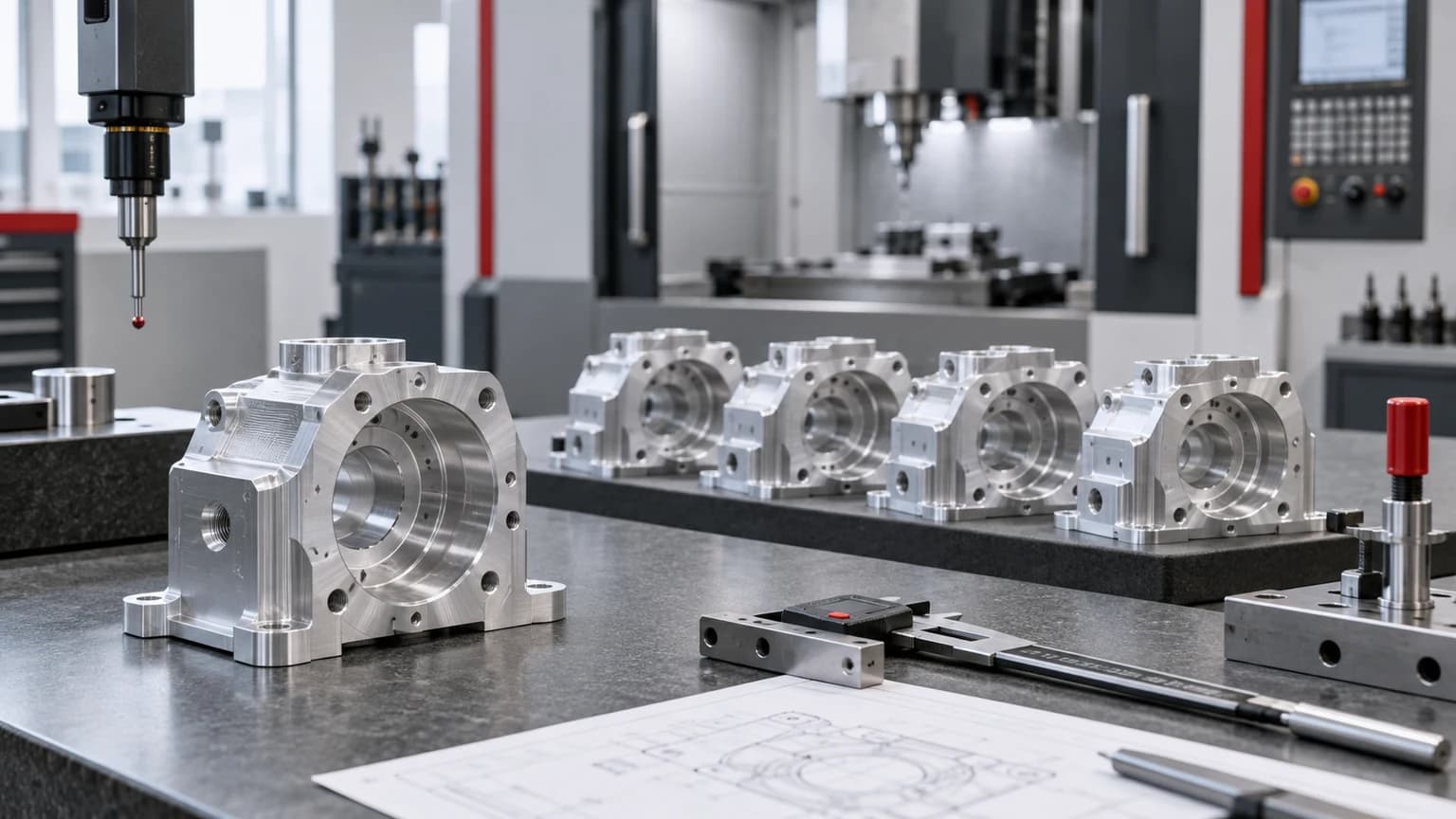
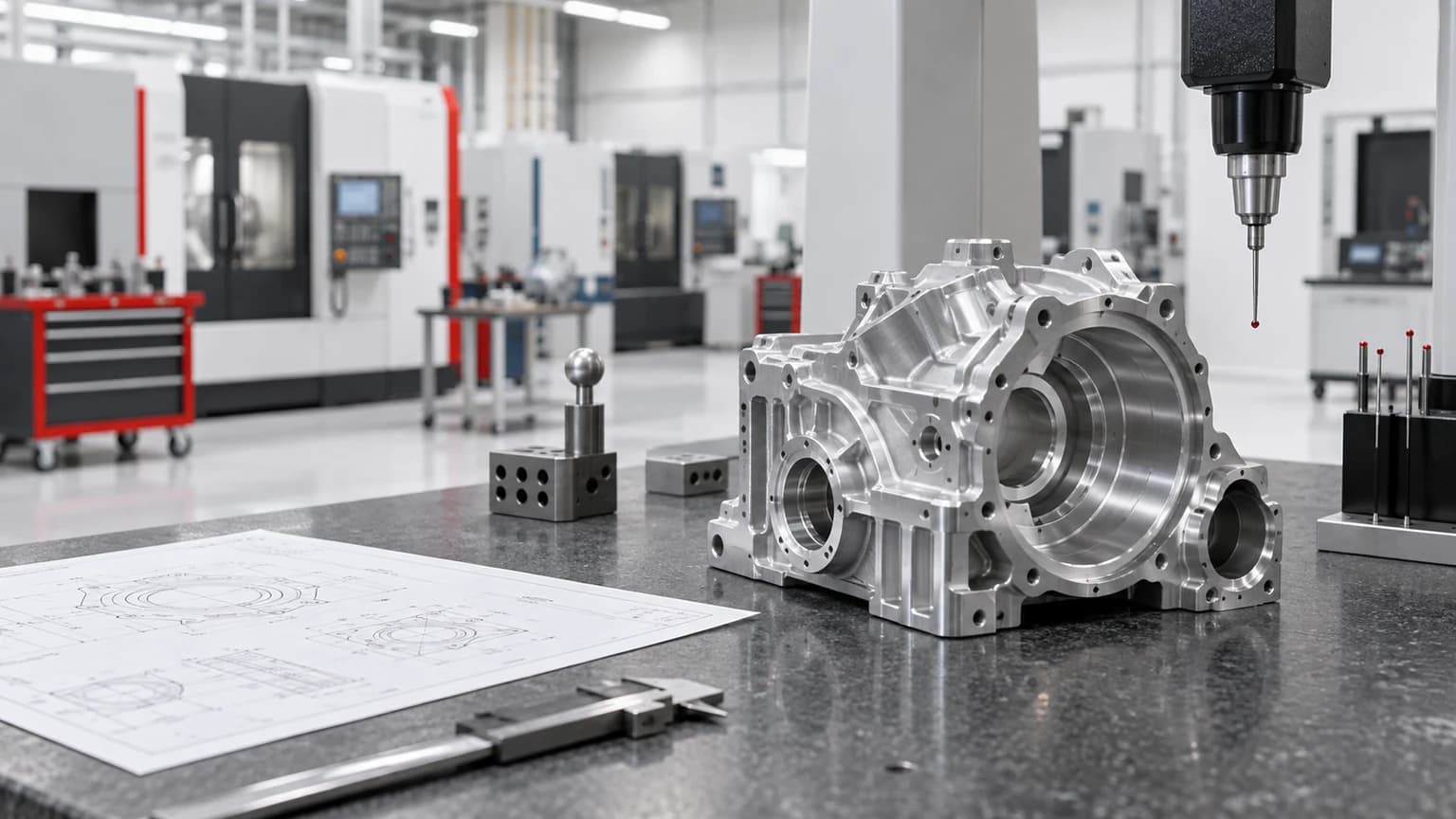
The inspection plan should match feature risk. Calipers, micrometers, height gauges, optical equipment and CMM inspection each have appropriate uses. For geometric relationships or complex precision machined components, request a sample CMM inspection report and confirm which characteristics will be reported. If a first article inspection report is required, define its format and sample quantity before order placement.
- Drawing revision and inspection-plan control
- CNC in-process inspection and final inspection checkpoints
- Measurement equipment suited to size, tolerance and geometry
- CMM report, first article or sampling requirements agreed at quotation
- Calibration, nonconformance and corrective-action procedures
04
Confirm material traceability and secondary operations
Material errors can be difficult to detect after machining and finishing. State the full alloy and condition, such as aluminum 6061-T6, stainless steel 316L or Ti-6Al-4V, instead of a broad family name. When traceability matters, ask how stock identification, material certificates and heat or lot references remain connected to the work order and finished parts.
Surface treatment can alter appearance, dimensions and lead time. Anodizing, passivation, plating, heat treatment and coating may involve qualified external processors even when machining is performed in-house. The supplier should identify those handoffs, protect critical surfaces and threads, and include post-finish inspection where the drawing requires final dimensions after treatment.
- Material certificate and heat-number traceability when specified
- Approved material substitutions and change-control rules
- Masking, cosmetic zones and dimensional allowance for finishing
- Inspection before and after heat treatment or coating where needed
- Packaging that protects machined surfaces during international shipment
05
Check the path from prototype to repeat production
A prototype proves more than basic machinability. It can validate workholding, tool access, burr control, measurement strategy and assembly behavior. Ask how the supplier records the approved program, fixture, tooling, inspection method and revision so later CNC machining production parts are built from a controlled baseline.
For recurring orders, review capacity and communication as carefully as equipment. A suitable partner should define how purchase-order changes, drawing revisions, material substitutions and production issues are escalated. Clear project ownership is especially important when the CNC machine shop is in China and the engineering or procurement team works in North America or Europe.
- Prototype feedback documented before the next release
- Approved sample and drawing revision linked to production
- Repeatable fixture, tooling and inspection references
- Capacity planning for forecast quantity and release frequency
- Named contact for engineering questions and commercial updates
06
Compare CNC machining quotes on the same commercial basis
Two CNC milling quotes can differ because the suppliers assumed different materials, setup counts, inspection effort, finishing routes, scrap allowance, freight terms or documentation. Ask each supplier to state what is included, excluded and still pending. A lower unit price can become more expensive if inspection reports, protective packaging or secondary operations appear later as change orders.
For buyers seeking a CNC machining quote, the fastest route to a useful response is a complete file package. Provide quantity breaks and target timing, then ask the supplier to separate one-time engineering or fixture cost from recurring unit cost. This makes prototype, small-batch and production options easier to compare.
- Material, machining, finishing and inspection scope
- One-time programming, fixture or tooling charges
- Quantity breaks and minimum-order assumptions
- Incoterms, shipping method, packaging and destination
- Quotation validity, lead-time basis and stated exclusions
07
Use a supplier audit checklist before releasing the order
Shortlist suppliers using evidence that is relevant to the component. Review the proposed process, verify inspection examples, discuss material records and ask who owns technical decisions. A video factory review or focused capability call can clarify whether the stated equipment and workflow match the quotation.
MIM Machining supports drawing-led precision CNC machining for custom metal and plastic parts. Send the controlled file package, material, quantities and inspection requirements for a project-specific review. We will confirm the proposed manufacturing scope and identify information that still needs agreement before production.
- Process plan addresses the component's highest-risk features
- Inspection evidence matches the requested reporting scope
- Material and external-process traceability are clearly defined
- Quotation assumptions are complete and commercially comparable
- Communication and change-control responsibilities are named
Frequently asked questions
Questions engineers and buyers ask before quotation.
What should I ask a precision CNC machining supplier before requesting a quote?+
Ask which manufacturing route fits the geometry, how critical features will be inspected, what material and finishing records are available, which operations are outsourced, and what the quotation includes. Send the same controlled drawing package to every supplier.
How can I verify that a CNC machine shop can hold my critical requirements?+
Request a process explanation and representative inspection evidence for similar feature types. Confirm the measurement method, datum setup, sampling plan and reporting format for your drawing rather than relying on a general tolerance claim.
Is the lowest CNC machining quote usually the best choice?+
Not necessarily. Compare material, setup, inspection, finishing, packaging, freight and documentation on the same basis. A quote with missing scope can produce higher total cost, rework or schedule risk later.
Can one supplier support both CNC prototypes and production parts?+
Yes, when the supplier can document the approved process and scale capacity appropriately. Confirm how programs, fixtures, revisions, material records and inspection methods transfer from prototype approval into repeat production.
Plan the next step
Continue from guide to project review.

Julie Cai
Project contact connecting international customers with MIM Machining's manufacturing and engineering review team.
Contact Julie