Small-batch CNC machining gives engineering teams production-like parts without committing to dedicated high-volume tooling. The value comes from using each batch to stabilize the design, manufacturing route and inspection plan before demand increases.
Key takeaways
There is no universal small-batch quantity; the right route depends on setup effort, material, geometry, inspection and future release pattern.
Use prototype and validation batches to control revisions, confirm inspection methods and remove avoidable manufacturing risk before repeat production.
A quote-ready package should show quantity breaks, critical features, finish, documentation and the expected path from sample approval to production releases.
01
What small-batch CNC machining means
Small-batch CNC machining describes a limited production run manufactured directly from CAD and controlled drawings without a dedicated forming or molding tool. The quantity may be a few validation units or a recurring release of dozens or hundreds, depending on part size, machining time, setup complexity and demand. A number that is small for simple custom turned parts may be a meaningful production batch for a large 5-axis housing.
The main advantage is flexibility. CNC machining prototypes and later production parts can use the intended engineering material, making the process useful for fit, assembly and functional validation. Design changes can often be introduced through controlled revisions before the next batch, but every change still needs manufacturing and inspection review.
- Functional prototypes in production-intent material
- Engineering validation and pre-production builds
- Bridge production while demand or tooling decisions remain uncertain
- Service parts and recurring low-volume programs
- Complex components whose annual demand does not justify dedicated tooling
02
Choose the correct stage: prototype, validation or production
A prototype answers design questions. A validation batch tests the controlled design, assembly, inspection method and process assumptions across several parts. A production batch is released against approved requirements and should rely on a stable route. Labeling the stage helps the CNC machining supplier plan the appropriate fixture investment, inspection coverage and documentation.
Rapid CNC machining can shorten the wait for physical parts, but speed should not remove controls that matter later. If a prototype uses substitute material, relaxed finish or temporary workholding, record those differences. Otherwise, the team may approve a sample that does not represent CNC machining production parts.
- Prototype: validate geometry, fit, access and basic function
- Engineering batch: evaluate material behavior and critical dimensions
- Validation batch: confirm assembly, inspection and repeatability
- Production batch: manufacture to the approved drawing and release plan
03
Control CAD, drawings and revisions before each release
Small batches become difficult to manage when purchase orders, CAD files and drawings show different revisions. Use one released package with a clear identifier. The 3D model defines geometry, while the 2D drawing communicates tolerances, datums, threads, surface finish, material, treatment and acceptance requirements that should not be inferred from the model alone.
When a prototype reveals a design change, document the reason and update both files before the next run. Redlines can support discussion, but production should not depend on an informal email chain. A controlled change log helps engineering, procurement, the CNC machine shop and the inspection team work from the same definition.
- Matching 2D drawing and neutral 3D CAD revision
- Marked critical-to-function features and datum structure
- Approved material, finish and post-processing notes
- Change history from prototype to validation and production
- Clear disposition of obsolete files and superseded samples
04
Plan setups, fixtures and unit cost across quantity breaks
Small-batch CNC cost combines one-time preparation with recurring machining. Programming, soft jaws, fixture design, tool setup and first-piece inspection may be spread across only a few parts. As quantity increases, those fixed activities are distributed across more units, while cycle time, material use, tool wear and inspection continue to affect each part.
Ask for quantity breaks that reflect realistic release sizes instead of a single annual total. The supplier can then compare flexible prototype workholding with a more repeatable production fixture. Custom CNC milling services may also recommend changes to corner radii, pocket depth, stock size or datum access that reduce machining time without changing part function.
- Separate one-time engineering and fixture cost from unit price
- Compare requested batch sizes rather than only annual volume
- Review stock form, setup count, tool reach and material removal
- Apply tight tolerance and fine finish only to functional features
- Confirm whether recurring orders can reuse approved fixtures and programs
05
Build inspection evidence during the first batches
Inspection should mature with the process. Early parts may receive expanded measurement to confirm the setup and drawing interpretation. Once the process is understood, the agreed control plan can focus on characteristics that affect fit, sealing, motion or safety while maintaining suitable checks on the remaining dimensions.
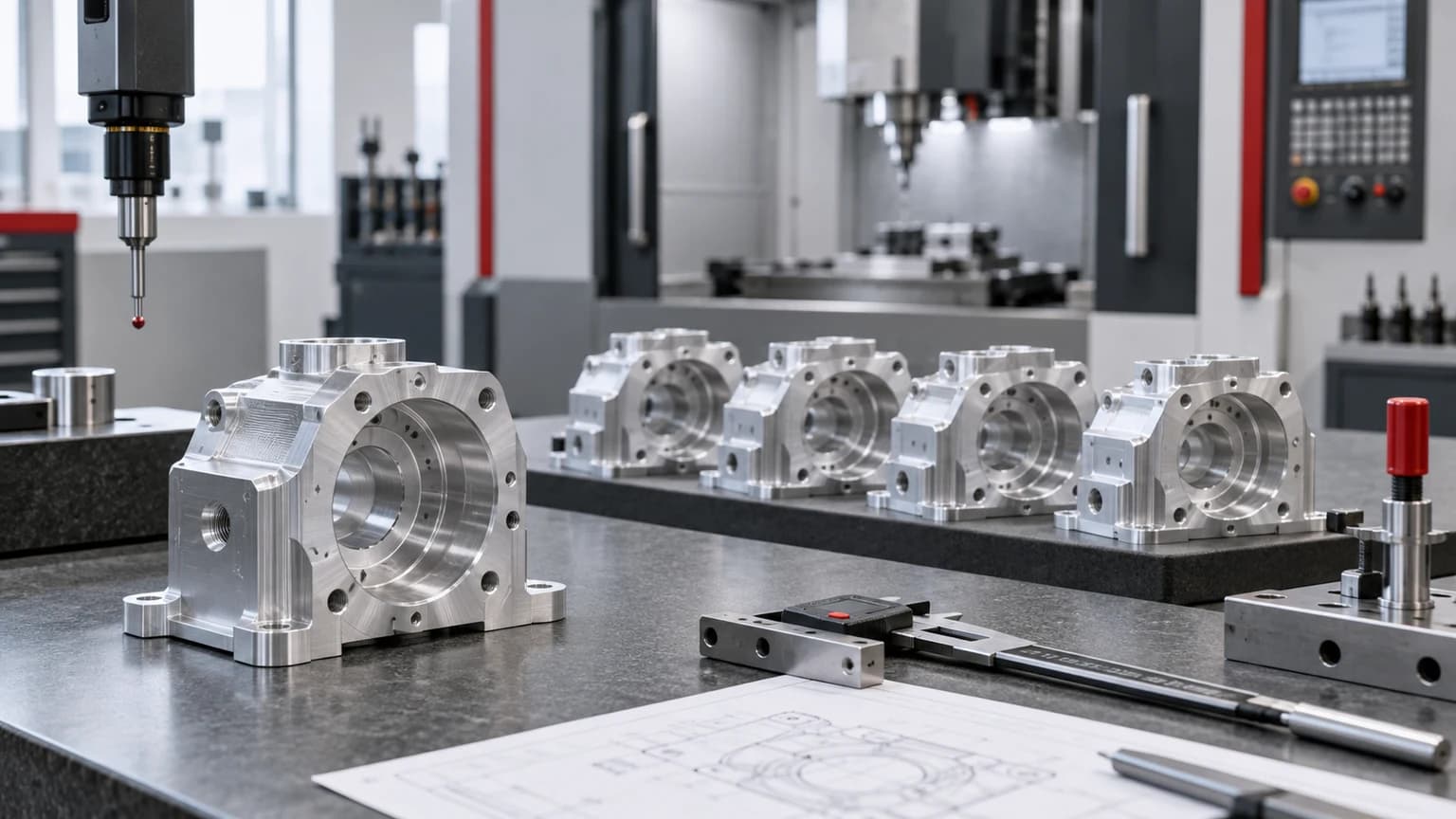
Define whether the order requires a first article inspection report, CMM inspection report, material certificate, surface-finish result or certificate of conformity. The report should identify the drawing revision and part or lot it represents. For precision CNC machining, this link between the measurement record and the controlled release is more useful than an isolated spreadsheet of numbers.
- First-piece approval before completing the batch
- CNC in-process inspection at risk-sensitive operations
- Final inspection tied to drawing revision and lot
- CMM reporting for complex geometric relationships where appropriate
- Defined response when a result is outside the acceptance requirement
06
Prepare the transition to repeat CNC production
A successful validation batch should leave a reusable manufacturing baseline. Record the approved program, fixture version, tooling approach, material source, finishing route, inspection method and packaging. If demand grows, this information helps the team decide whether to add fixtures, run multiple machines, revise sampling or evaluate another process.
Production CNC milling and production CNC turning also require capacity planning. Share the forecast, release frequency and acceptable delivery window rather than only the next purchase order. The supplier can assess raw-material availability, machine loading and external finishing capacity before a schedule becomes critical.
- Approved sample and revision-defined manufacturing baseline
- Repeatable workholding and documented inspection references
- Forecast quantity, release size and delivery cadence
- Material and finishing capacity reviewed before scaling
- Change approval process for design, source or method updates
07
Send a quote-ready small-batch CNC package
A complete inquiry lets suppliers distinguish rapid CNC milling prototypes from a controlled recurring program. Include the current files, quantity breaks, expected future demand and the features that need special inspection. State whether the immediate objective is design learning, validation, bridge production or repeat supply.
MIM Machining supports small-batch CNC machining for custom metal and plastic components, including coordinated milling, turning and dimensional inspection. Share your drawings and release plan for a project-specific review of manufacturability, quotation assumptions and next steps.
- STEP file and controlled 2D drawing
- Exact material, finish and applicable specifications
- Quantities for prototype, validation and expected repeat releases
- Critical dimensions, assembly interfaces and cosmetic zones
- Inspection reports, material records and packaging needs
- Target dates, destination and preferred shipping terms
Frequently asked questions
Questions engineers and buyers ask before quotation.
What quantity is considered small-batch CNC machining?+
There is no fixed industry quantity. Part size, cycle time, setup cost, material, inspection effort and release frequency determine whether a run is treated as a small batch. Provide several quantity breaks for a useful quotation.
Is CNC machining suitable for both prototypes and end-use parts?+
Yes. CNC machining can produce functional prototypes and end-use components in engineering metals and plastics. The files, material, finish and inspection scope must clearly identify whether the part is exploratory or production controlled.
How can we reduce small-batch CNC machining cost?+
Control unnecessary tolerances, use practical internal radii and stock sizes, reduce avoidable setups, provide realistic quantity breaks and allow approved fixtures or programs to be reused. Review each change against function before altering the drawing.
What inspection documents should accompany a small CNC batch?+
The appropriate package depends on part risk and customer requirements. It may include dimensional results, a first article or CMM report, material certificate, finish documentation and certificate of conformity. Agree on the exact scope before quotation.
Plan the next step
Continue from guide to project review.

Julie Cai
Project contact connecting international customers with MIM Machining's manufacturing and engineering review team.
Contact Julie