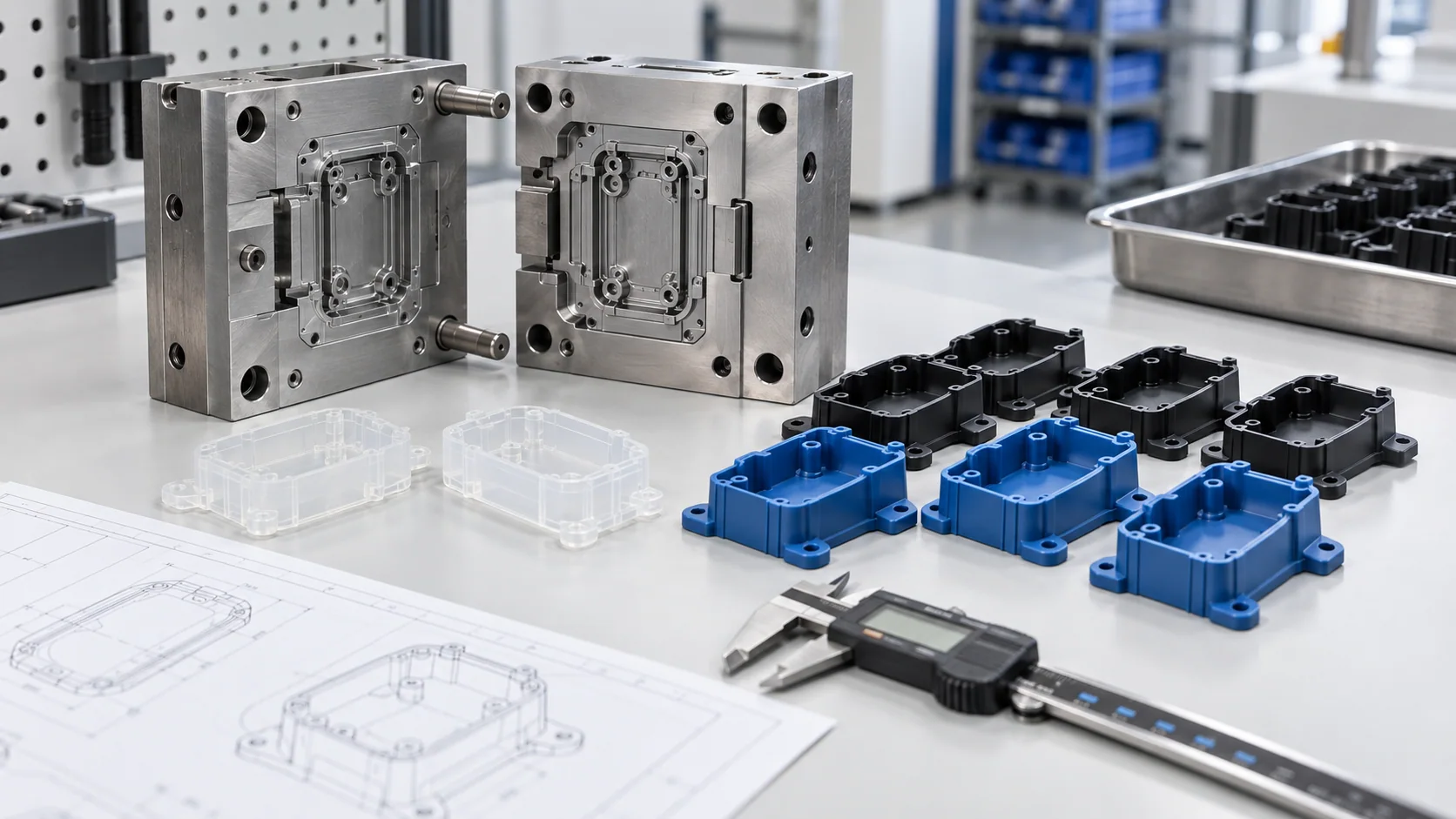
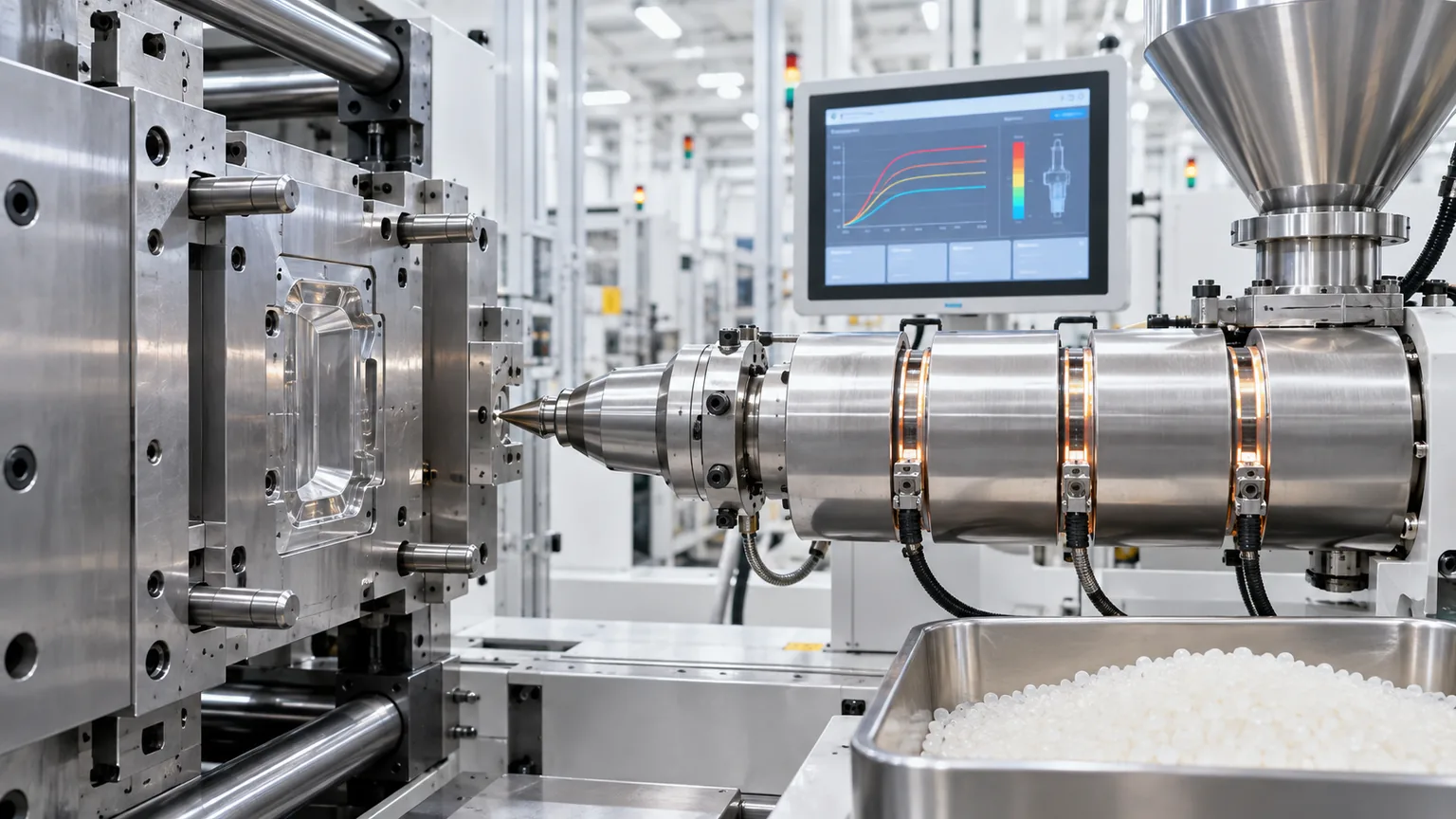
Injection molding temperature is not one machine setting. Melt temperature, mold temperature, residence time, moisture, shear and part geometry work together to determine whether a resin fills, packs and cools consistently.
Key takeaways
Melt temperature describes the polymer at the nozzle; mold temperature controls cooling at the cavity; controller setpoints are inputs rather than proof of the actual melt condition.
Resin supplier processing data for the exact grade takes priority over a generic material-family range, especially for filled, flame-retardant or high-temperature grades.
A robust trial records material preparation, temperature profile, fill, pack, cooling and measured part results so an approved process can be repeated.
01
Separate melt temperature, mold temperature and setpoint
Melt temperature is the temperature of the polymer as it leaves the screw and approaches the mold. It controls viscosity and therefore affects fill pressure, flow through thin sections, weld-line formation and the risk of thermal degradation. The actual melt receives energy from heater bands as well as shear generated by screw rotation and back pressure.
Mold temperature is a different control. It influences how quickly the material freezes against the cavity, which affects surface replication, shrinkage, internal stress and cycle time. Barrel-zone setpoints are the machine inputs used to create the melt profile; they should not be confused with a direct measurement of the polymer at the nozzle.
- Melt temperature: polymer flow and degradation window
- Mold temperature: cooling, surface and dimensional behavior
- Barrel setpoints: machine inputs used to establish the melt profile
- Residence time and shear: additional sources of thermal history
02
Use material-family ranges only as an early screening tool
General processing ranges help a design team identify whether a resin needs conventional or high-temperature equipment, but they are not production settings. Common unfilled grades of ABS, polypropylene, polycarbonate, nylon and acetal occupy different melt and mold-temperature windows. Reinforcement, color, impact modification, flame-retardant packages and supplier formulation can move those windows materially.
The approved technical data sheet and processing guide for the exact manufacturer and grade should govern the trial plan. If a substitute is permitted, define the required mechanical, thermal, appearance and compliance properties, then approve the alternate grade before tooling samples are evaluated.
- ABS family: commonly processed in a moderate melt-temperature range with drying requirements dependent on the grade
- PP and PE families: broad processing windows, but shrinkage and cooling behavior remain geometry-dependent
- PC and engineering nylons: higher melt temperatures and tighter moisture or residence-time control
- PPS, PEEK and other high-temperature polymers: specialized equipment, tooling temperature and material handling may be required
03
Recognize defects associated with an unsuitable melt condition
When the melt is too cool for the geometry, viscosity rises. The cavity may short-fill, thin walls may freeze early, pressure demand increases and visible flow or weld-line problems can appear. Raising pressure alone may not solve a temperature or flow-length limitation and can create flash or stress elsewhere.
When the melt is too hot or remains in the barrel too long, the polymer can degrade. Discoloration, odor, streaking, gas, loss of impact performance and unstable dimensions may follow. Higher temperature also increases cooling demand. The correct response depends on material preparation, residence time, screw speed, back pressure, venting, gate design and the measured process—not one temperature number.
- Possible low-temperature symptoms: short shot, hesitation, poor surface replication and weak weld areas
- Possible excessive-temperature symptoms: discoloration, splay, gas, degradation and longer cooling
- Similar defects can have different causes; confirm the complete process before changing settings
04
Control moisture, fillers and residence time
Hygroscopic materials absorb moisture and may require drying to a defined condition before molding. Moisture can react with some polymers during processing, reducing molecular weight and mechanical performance even when the part appears acceptable. Drying temperature, time, dew point and transfer from dryer to machine should follow the material supplier's instructions.
Glass fiber, mineral filler and color systems change viscosity, wear and heat transfer. Long residence time, excessive shear or repeated material recycling can add thermal history. Record the exact grade, lot, regrind allowance and preparation method so sample results represent the intended production material.
- Material manufacturer and exact grade
- Drying method and moisture-control requirement
- Filler, color and additive package
- Permitted regrind or recycled content
- Barrel capacity, shot size and residence-time risk
05
Connect the temperature window to part and tool design
Thin walls, long flow paths, abrupt thickness changes and small gates can push a resin toward the high-flow end of its usable window. Thick sections and poorly balanced cooling may increase cycle time and warpage even when the cavity fills. Gate position, venting, runner balance and cooling-channel layout therefore influence the practical process window.
Mark appearance-critical surfaces, sealing features, flatness requirements and dimensional datums on the drawing. If mold-flow analysis or a structured filling study is required, agree on the assumptions and material data before the tool is released. Geometry, resin and process should be reviewed together rather than sequentially.
- Nominal wall and wall-thickness transitions
- Flow length, gate location and weld-line risk
- Venting and trapped-gas locations
- Cooling balance and likely warpage
- Critical dimensions and conditioning time before measurement
06
Build a useful sampling and process record
A first molding trial should do more than produce complete parts. Record the material condition, barrel profile, verified melt or nozzle condition where required, mold temperature, fill time, transfer point, packing, cooling and cycle time. Link those settings to dimensional, appearance and functional results.
Once samples are approved, identify which process variables are controlled and which changes require renewed evaluation. Measurement timing and environmental conditioning matter for materials that continue to shrink, absorb moisture or relax after ejection. A retained approved sample and clear inspection plan support repeat releases.
- Documented material preparation and machine setup
- Defined sample quantity and drawing-based inspection
- Appearance, assembly and functional approval
- Process window or controlled-parameter record
- Lot traceability and change-approval rules
07
Prepare the molding RFQ before the first trial
Provide the current 3D model and controlled 2D drawing with the exact resin grade, color, texture, quote quantity, annual forecast and target timing. Add the critical dimensions, appearance standard, assembly interfaces, testing and documentation requirements that cannot be inferred from CAD geometry.
MIM Machining reviews drawing-led plastic injection molding projects from DFM and tooling through samples and repeat production. Processing values are established for the selected grade and tool during project-specific review; generic material ranges are not a substitute for the approved resin data and trial record.
- 3D CAD, 2D drawing and revision
- Exact resin manufacturer, grade, color and additives
- Drying, compliance and substitution requirements
- Critical dimensions, cosmetic zones and functional tests
- Initial quantity, annual volume and release plan
- Sample approval, inspection records and packaging
Plan the next step
Continue from guide to project review.

Julie Cai
Project contact connecting international customers with MIM Machining's manufacturing and engineering review team.
Contact Julie